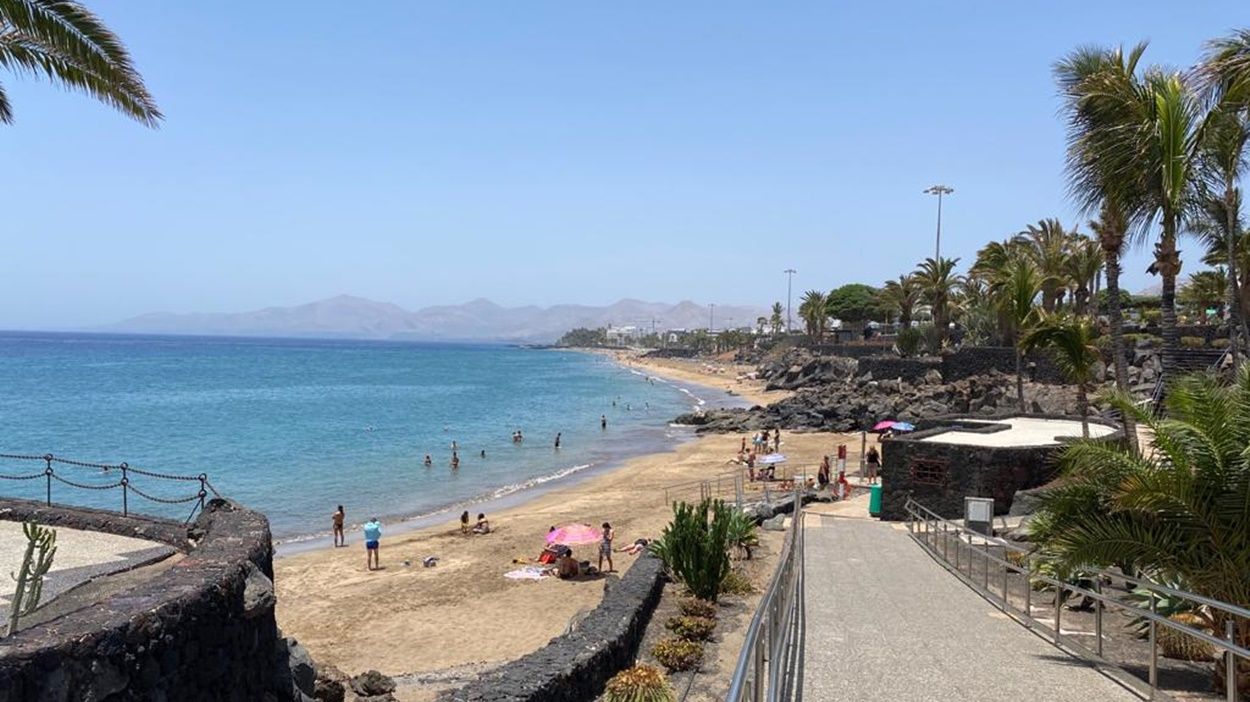
The César Manrique Foundation has presented this Thursday allegations to the project of the company Yaizatún SA to install marine cages on the coast of Lanzarote between La Bufona (Arrecife) and the beach of Barranquillo (Tías).
The FCM has highlighted that this initiative, which proposes the cultivation of 9,000 tons of tuna, sea bass and sea bream per year, is projected on a space of sebadales or underwater meadows. These plants are fundamental for the development of marine life, carbon dioxide sinks and oxygen producers. They are also the food of sea turtles.
As the Foundation has stated in its allegations, the sebadales suffer "strong regressions" in the Canary waters due to the impact of the human being. They even form part of the Spanish Catalog of Threatened Species, in the vulnerable category.
Part of the Yaizatún SA project for the installation of fattening cages on the coast of Lanzarote is planned in the Special Conservation Zone of Sebadales de Guasimeta, protected since 2010 as part of the spaces of the Natura 2000 Network.
This ZEC protects both "the meadows themselves, as well as their potential habitat, that is, where their recovery could develop." Thus, the Foundation has warned that "any human action" that damages the sebadales included within it would violate the legislation.
In addition to its affectation to the sebadales, the FCM has recalled "the impacts that offshore aquaculture produces on the coastal environment." The increase in nutrients derived from caged fish causes changes in the environment, damage to the sebadales and "the reproduction of opportunistic species."
Thus, it has highlighted that the fattening of Atlantic tuna requires live bait and also involves the entry of more "organic matter" into the water column. Thus, it has also highlighted that "even the minimum distances, between 300 and 500 meters, may be insufficient" due to the effects that organic matter can have on them.
The Foundation has indicated that the installation planned by Yaizatún "not only violates this minimum safety distance, but the polygon itself sits on a potential habitat for marine meadows in the ZEC Sebadales de Guasimeta.
"Any action or intervention that could negatively affect this Marine ZEC should be avoided, as could be the case with a polluting activity such as aquaculture," defends the FCM.
For these reasons, the FCM has reminded the institutions that the sebadales (Cymodecea Nodosa) cannot be affected, nor can their habitat or the ecosystem that make them up, while asking to be "even more cautious" with possible affectations to avoid the regression of the meadows.
Thus, the Special Conservation Zone Sebadales de la Guasimeta is a natural habitat of community interest composed of sandbanks permanently covered by shallow seawater that presents a negative trend in its evolution. The same occurs with the marine meadow Cymodecea Nodosa, which is in decline, but the causes are unknown.
Regarding the negative consequences of marine aquaculture, the Foundation has highlighted the "escape of fish from the crops." Storms, accidents, errors in the handling of cages or acts of sabotage cause these species to escape and may affect the native species of the islands. This occurs, for example, with the case of sea bass.
In addition, aquaculture facilities also generate a call effect for wild fish, taking advantage of the surplus of organic matter. Specifically, they cause "alterations in the distribution and behavior of sharks and rays, of the Elasmobranch family and many of them on the IUCN red list.
Among the affected species is the angel shark or angelote, included in the Spanish Catalog of Threatened Species as in danger of extinction. The angelote has more abundant species in the eastern islands, especially on the coast between Tías and San Bartolomé.
In addition, silky, coppery, hammerhead and black dogfish, yellow dogfish, spiny dogfish, sea eagle or bishop and even loggerhead turtles also arrive under the marine cages. The Foundation has highlighted that these cages "alter the distribution and behavior of the species and, possibly, functional aspects of the coastal ecosystem."
Thus, in the allegations presented in the project has also emphasized "the relevant alteration" that generates on the landscape, being located in front of the population centers, as occurs in Playa Honda and on the island in general. In this line, he recalled that Lanzarote has Biosphere Reserve status.
To conclude, he has highlighted the impact it has on the use of the coastline, being able to contaminate the water for bathing on the beaches of Matagorda or Guasimeta, among others. While they have highlighted that it could affect the conventional fishing sector.
It has also highlighted the social consensus against its installation.
Add La Voz de Lanzarote as a preferred Google source.
Stay informed with the latest current news.