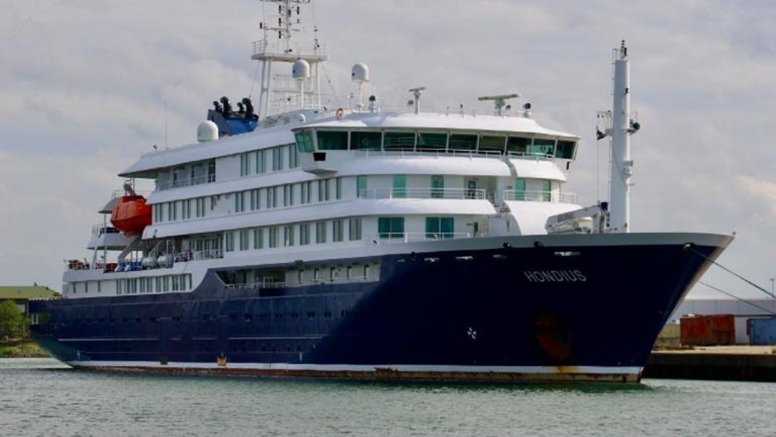
The World Health Organization (WHO) has assured this Tuesday that it is coordinating with the Government of Spain for the cruise ship on which a hantavirus outbreak has been detected MV Hondius, owned by the company Oceanwide Expeditions, to finally be welcomed by the Canary Islands. However, the Spanish Ministry of Health has reported that the decision will depend on the epidemiological data collected as it passes through Cape Verde.
For the moment, the cruise ship is waiting outside the port of Isla Santiago, in the archipelago south of the Canary Islands, where it unsuccessfully requested to disembark the sick. According to the Government of Spain, once the epidemiological data is received, "it will be decided which stop is most pertinent," but until then, "it will not adopt any decision."
Coordination between Spain and the WHO
According to Agencia Efe, the director of epidemic and pandemic prevention and preparedness of the World Health Organization, Maria Van Kerkhove, who during the covid-19 pandemic led a technical cell created to face that global emergency, has indicated from Brussels that they are working with the Spanish authorities, who will be in charge of receiving the ship.
For his part, the delegate of the Government of Spain in the Canary archipelago, Anselmo Pestana, has assured that "Canary Islands and Spain are prepared for these issues. We have a robust health system, capable of facing this challenge". At the same time, he indicated that refusing to take in the boat would be "a kind of omission of the duty to rescue". "We must be supportive," he insisted.
Van Kerkhove added that Spain "will carry out an exhaustive investigation, a complete epidemiological investigation, total disinfection of the ship and, of course, they will assess the risk of the passengers on board". It should be recalled that fourteen Spaniards, among passengers and crew members, are traveling on the vessel.
For the moment, the WHO has assured that the global risk from this virus is "low". While Pestana has assured that from the archipelago there are first-level hospitals and that passengers can leave the islands to their countries of origin, once they are attended to. People of 23 nationalities are traveling on the vessel.
The World Health Organization announced on Tuesday morning that a total of seven infected people had been registered, with two confirmed cases of hantavirus and another five suspected of suffering from the disease. Three of those affected have died, a fourth passenger is in intensive care in South Africa. While the other three remain on board the cruise ship.
Priority: medically evacuate two people
The director has explained that the top priority is to medically evacuate the two sick crew members, of British and Dutch nationality, one with mild symptoms and the other with more acute symptoms. At the same time, she has reported that the third infected person on board "is well and healthy".
"The plan that is being prepared at this moment is already underway," he indicated. He then explained that the plan is for the ship to continue its route towards the Canary Islands and added that, for now, there are no more symptomatic patients on board.
"So, once the two sick people on board are medically evacuated, the ship will be able to depart," clarified the WHO official, who wanted to downplay the outbreak on this ship, adding that even though "it is not talked about, there are thousands of infections every year." She thus insisted that the reservoir for hantavirus is rodents and that transmission can only occur in cases of "very close" contact between people.
Origin of the outbreak
According to the information disseminated by the Ministry of Health, current evidence suggests that passengers and crew contracted the virus on the vessel itself. Hantavirus is transmitted through rat droppings in areas where the virus circulates. According to this same source, an adventure zone where those affected were present could have been the origin of the outbreak. Nevertheless, it is not ruled out that some may have been infected on board by rats or through close contact with one of the deceased.
This virus can infect people all over the world and cause them serious illness. It can be transmitted by inhalation, by breathing in places where the feces or urine of infected rodents released the virus, or by direct contact with live or dead rodents, or by contact with their urine.
What is hantavirus?
Hantaviruses are zoonotic viruses that normally occur among rodents, but can occasionally be transmitted to humans. This infection can cause serious illness and even death, depending on the type of virus and geographic location. Among other consequences, it can cause hantavirus cardiopulmonary syndrome, which progresses rapidly and affects the lungs and heart, being more frequent on the American continent; while in Europe and Asia, hemorrhagic fever with renal syndrome, affecting the kidneys and blood vessels, usually occurs.
Until now there is no specific treatment for this virus.
According to the World Health Organization, in Argentina and Chile the Andes virus occurs, which belongs to the hantavirus family and can be transmitted between people. In addition, transmission to humans occurs after being in contact with the urine, excrement, or saliva of infected rodents.
Add La Voz de Lanzarote as a preferred Google source.
Stay informed with the latest current news.