The scientific vocation of the 2012 Nobel Prize in Physics Serge Haroche (Casablanca-French Protectorate of Morocco, 1944) would not be understood without the Apollo mission that took humanity to the Moon in 1969, in what he considers an adventure in which physics and exploration were mixed, and in which, for the first time, he could put numbers of velocities, orbits, and trajectories to what he saw.
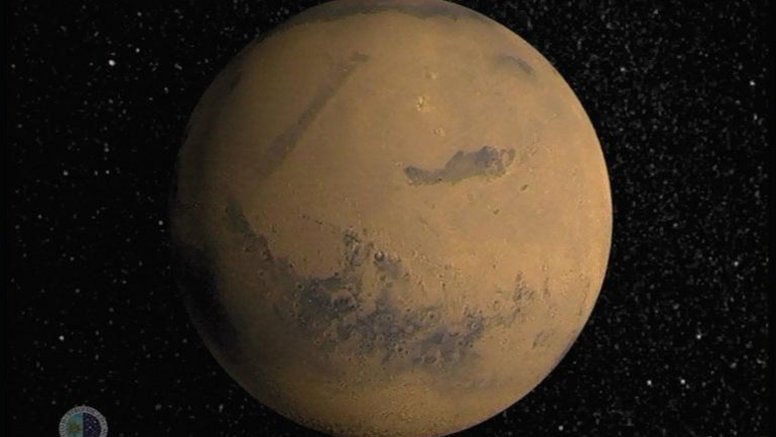
That fascination with understanding how an object could escape Earth's gravity and reach the Moon, he recalls, was what led him to dedicate himself to science and when today he is asked about the Artemis mission or the debate about going to Mars, he is clear: Thinking about colonizing the red planet is "simply stupid".
This is how the French Nobel laureate expresses himself in an interview with EFE on the occasion of his visit to Tenerife, where he participates alongside fellow Nobel laureate F. Duncan Haldane in the XVIII Congress of Physics Students (COEFIS), organized by students from the University of La Laguna and with activities at the Institute of Astrophysics of the Canary Islands.
Haroche, awarded alongside his colleague David Wineland for developing methods to observe and control quantum systems without destroying them, believes that this new return preserves that potential to inspire new generations of scientists, but warns of the need not to confuse that ambition with expectations that, from a physical point of view, are not realistic, such as the idea of colonizing Mars.
"It is not possible," insists the scientist, who advocates for focusing efforts on viable objectives such as the return to the Moon, much more feasible at a technical level, since the mission takes a few days, compared to the months that going to Mars would require, and the much greater risks for astronauts, added to the difficulties in communications.
All of this turns both missions into "completely different" realities and, in his opinion, there would never be the possibility of establishing autonomous life there.
Haroche considers that this type of approach responds to an excess that ignores physical limits, comparable, he points out, to the idea of achieving immortality. “It's the same type of thinking of those who believe they will be able to live forever. Completely irrational," he points out.
In this sense, he/she defends the need to set limits and prioritize the use of resources in the face of the urgent problems facing Earth, since many of the tasks planned for Mars could be carried out by robots, without the need to send people, he/she states.
The importance of basic science
In the face of these expectations, the Physics Nobel vindicates the role of basic science, also in the space field.
In his judgment, the development of infrastructures around the Moon can be considered part of that fundamental or basic research effort, despite its high cost.
That doing science for science, remember, is from where a good part of today's great technological discoveries proceed, which stem from basic discoveries made decades ago. “You cannot have useful applications if you don't have basic science first,” he highlights.
However, recognizes that this type of research clashes with the times of political planning, which is what many budgets depend on, since the results are uncertain and require long deadlines.
“The temporal scale of basic science is much longer than that of politics,” Haroche indicates, which makes it difficult to fit into systems with short electoral cycles.
In this context, the physicist points to China, whose form of government grants it a clear advantage, he says, by being able to plan long-term and having leaders with scientific training, while in other democracies political leaders lack that profile, he explains.
This contrasts, he points out, with what is currently happening in the United States, formerly a leader in scientific research and which currently, he believes, is governed by people who “have no idea what science is” and are even “enemies” of it for ideological reasons.
Problems that only science can solve
Beyond space exploration, Haroche warns that science currently faces one of its greatest challenges due to the rise of discourses that question scientific knowledge through “irrational” attacks, linked to a lack of education" and to the resentment of sectors that feel excluded from progress".
This connects, he reflects, with warnings already formulated in the French Enlightenment about the need to have educated citizens. Without that base, he points out, societies are exposed to being “deceived by charlatans”, as at present.
The physicist cites as an example the distrust of vaccines and warns of how especially worrying it is that this occurs in a context in which humanity faces challenges such as climate change, pandemics or the need for clean energy, problems that, he emphasizes, “can only be solved with science.”
Critical of the lack of AI regulation
Haroche is critical of the unregulated development of Artificial Intelligence (AI) and the risks associated with its development which, unlike quantum computers, he compares, is already having an immediate impact.
The Nobel laureate states that the main danger lies in its use to control populations or manipulate electoral processes, and advocates for establishing clear rules at an international level that allow guaranteeing confidence in these tools.
Also expresses his concern about the role of big tech companies, whose leaders, he says, are aligning themselves with governments that do not act rationally, which could lead to attempts to “take control of the world” through these tools.
Faced with this scenario, Haroche vindicates human intelligence, with its capacity for intuition, creativity, and accumulated experience, which continues to make it irreplaceable. “The human brain is not a machine,” says the scientist, who rejects visions that propose a future dominated by artificial superintelligence, something he considers a “nightmare.”
Add La Voz de Lanzarote as a preferred Google source.
Stay informed with the latest current news.