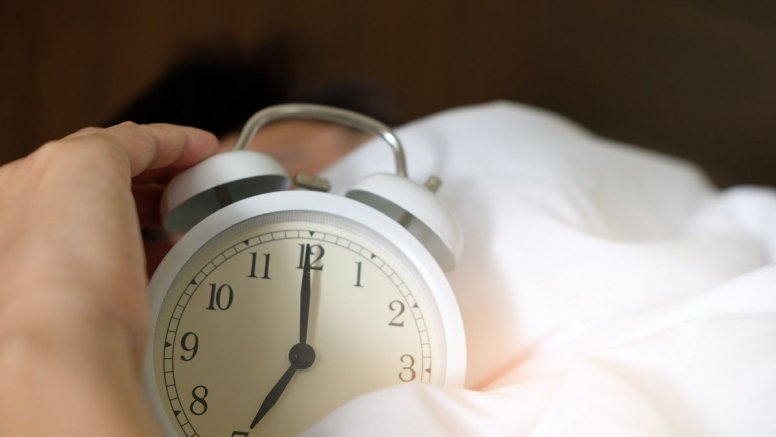
The Santa Cruz de Tenerife College of Psychology stated this Monday that the time change scheduled for October 28 will bring with it "a disruption in the biological clock" and psychological effects such as a drop in mood, lack of enthusiasm, drowsiness, insomnia, anxiety or irritability.
This is a symptomatology that could be different in each particular case, explains psychologist Azucena Duque in a statement, who points out that "the decrease in the hours of light to which we are exposed can produce disruptions and changes in our heart rate as well as a decrease in serotonin, a chemical substance in our body related to mood."
Duque points out that these changes in the organic regulation of the body produce, in the first place, a state of confusion and discomfort in which what is happening to the body is not understood, thus producing effects on the psychological and emotional state.
Likewise, the psychologist reminds that environmental changes do not affect all people in the same way. "There are very sensitive people who significantly accuse these changes, both at a psychological and physiological level, however others feel them to a lesser extent," she adds, so she considers that the main thing is to understand "what is happening to our body and mind, which are adapting to a new stage."
And for this "we must give ourselves time and gradually integrate these new sensations, emotions and thoughts," says Azucena Duque.
"We must give ourselves time and gradually integrate these new sensations, emotions and thoughts”
To face this time change and gradually achieve rebalancing, the Santa Cruz de Tenerife College of Psychology recalls that beyond understanding what is being experienced, it is important to seek a proactive and positive attitude with which to face the new situation. Sharing what is being experienced with friends and family will make the experience more bearable, and according to the COP, "contact heals."
It is also important to try to expose yourself to sunlight whenever possible, maintain a balanced diet and perform physical activity.
Psychologists insist that the best antidote to deal with the adverse effects of the time change is to "welcome this new stage with affection, introducing new plans and activities that help to live this time with enthusiasm" and if the symptoms persist over time "it is vital to seek the help of a specialist."
Add La Voz de Lanzarote as a preferred Google source.
Stay informed with the latest current news.