A team of cosmologists from the Instituto de Astrofísica de Andalucía (IAA-CSIC) and the Instituto de Astrofísica de Canarias (IAC) has achieved a census of the dark matter halos of the Universe, the most precise until now. The project is based on the development of a new model, called GPS+, which can predict how many dark matter halos exist in each stage of cosmic history.
In the universe there exist enormous invisible structures that surround galaxies and galaxy clusters. They are the dark matter halos, concentrations of matter that does not emit light nor can be observed directly, but whose gravity keeps galaxies united and guides their formation. These halos act as the “scaffolding” of the universe: within them galaxies form and evolve.
A new study led by the Instituto de Astrofísica de Andalucía (IAA-CSIC) and the Instituto de Astrofísica de Canarias (IAC) has achieved the most precise census to date of these structures throughout the 13.8 billion years of history. This record, which cosmologists call “halo mass function,” is not an individual list of objects, but a mathematical description that indicates how many dark matter halos exist in each mass range at a given epoch of the universe.
“This is important because not all halos are the same: some host very small galaxies; others contain galaxies like the Vía Láctea; and the most massive ones can gather enormous clusters with hundreds or thousands of galaxies”, explains Elena Fernández García, researcher at IAA-CSIC and first author of the article, published in the journal Astronomy & Astrophysics Letters.
This new result is based on the development of a theoretical model called GPS+, which allows predicting with great precision the abundance of dark matter halos at different stages of the history of the universe.
Towards a more precise description
The work represents a significant advance because it corrects limitations of previous approaches, which could deviate by up to 80% when describing the primitive universe. The new model reduces these discrepancies, especially at the extremes of mass —where uncertainties were greater—, placing them around 10–20%, maintaining high precision throughout almost all of cosmic history.
“The key lies in a simple idea,” points out Juan Betancort Rijo, researcher at the IAC. “The matter of the universe does not group together forming perfect spheres, but irregular and complex structures. By incorporating this reality and other details of the gravitational collapse process, the GPS+ model describes with greater fidelity how dark matter halos are formed and, consequently, how galaxies are born and evolve.”
To check the robustness of the model, the team contrasted it with Uchuu —“universe” in Japanese—, a set of the most complete and precise cosmological simulations carried out to date. These simulations, in whose elaboration the IAA-CSIC participated, were carried out by Tomoaki Ishiyama, researcher at the University of Chiba and co-author of the study, and executed on Fugaku, one of the most powerful supercomputers in the world, in Japan.
“All the catalogs of dark matter halos generated from the Uchuu simulations are available in our database Skies & Universes, developed at IAA-CSIC, points out José Ruedas, head of this Big Data infrastructure and co-author of the work.
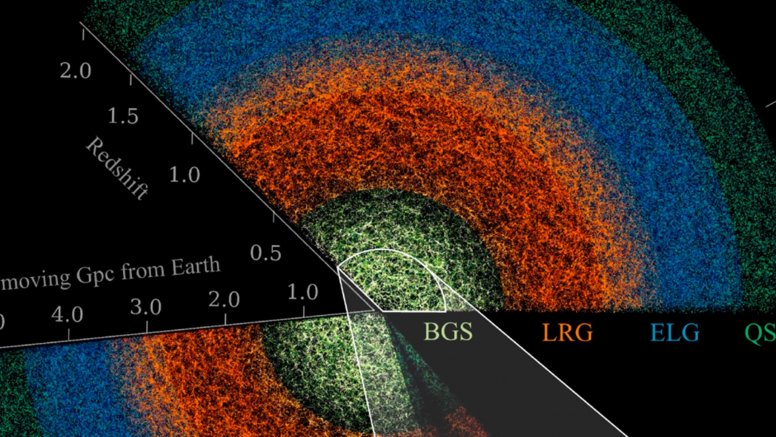
These simulations have not only served to test the model, but also to improve the tools with which to interpret current astronomical observations. The new predictions will allow for a more precise analysis of the data obtained by telescopes such as the James Webb Space Telescope, which observes very distant galaxies, formed during the early stages of the universe, as well as the results of large sky surveys, such as DESI (Dark Energy Spectroscopic Instrument), whose objective is to reconstruct the large-scale distribution of matter in the universe and to understand the nature of dark energy, an international project in which the IAA-CSIC has played a key role in its technological development and currently in its scientific exploitation.
“Having a more accurate census of dark matter halos is key to connecting these observations with theoretical models and checking if our description of the universe —including the nature of dark matter and energy— fits the data,” states Elena Fernández (IAA-CSIC).
The GPS+ model is now available to the international scientific community, which will facilitate its incorporation into future analyses and simulations. The work reinforces the contribution of the Instituto de Astrofísica de Andalucía (IAA-CSIC) and the Instituto de Astrofísica de Canarias (IAC) to cosmological research, in collaboration with the Universidad de Chiba (Japan) and the Universidad de Virginia (USA), and consolidates their participation in the development of essential theoretical tools to interpret the great surveys of the universe.
Add La Voz de Lanzarote as a preferred Google source.
Stay informed with the latest current news.