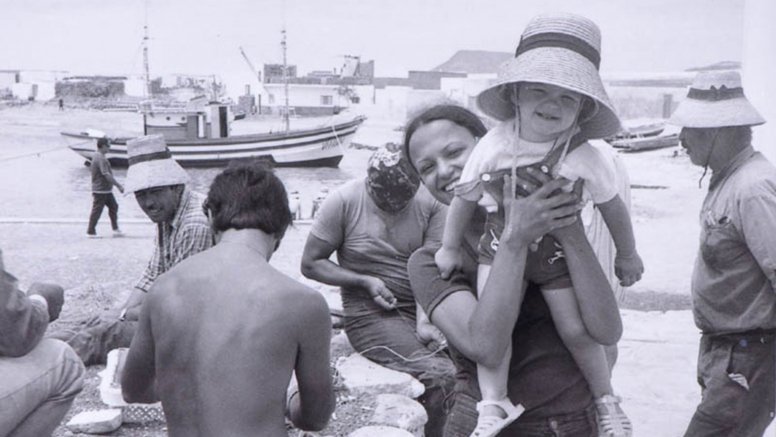
There are now more than 17,000 photographs and 530 old films that can be seen on the website of Memoria Digital de Lanzarote, the project managed by the Centro de Datos of the Cabildo de Lanzarote and which is dedicated to the digitization, archiving and dissemination of historical audiovisual material about the past of the islands of Lanzarote and La Graciosa.
In recent months, donations have multiplied of private collections, thus allowing the archive of Memoria Digital de Lanzarote to be enriched, with hundreds of images and dozens of films having been incorporated into the public website (www.memoriadelanzarote.com) and which now the island's citizen can consult from anywhere.
Regarding films and home videos, recordings in formats such as Super 8 mm or VHS have been added, which document family scenes, landscapes, and popular celebrations from the 1960s to the 1990s. Among the new audiovisual collections, the contributions of Paco Rivero (Fundación Néstor Álamo), Juan José Pacheco, Maxi Ferrer, José Luis Arráez, el Centro de Cultural Audiovisual de Gran Canaria, Biblioteca Universitaria de la ULPGC, FEDAC, Frede Pérez Dorta, Ángel Corujo, Juan Cabrera Bermúdez, Aldo Brito or Juan Lasso Cabrera.
In addition to all this, regarding film material, a restoration of the original copy of the film “La Octava Isla” has been carried out, by the Gran Canarian filmmaker Pedro Siemens, a 16 mm film that is deposited in the Centro de Cultura Audiovisual de Gran Canaria. The physical imperfections due to chemical aging of the tape (mainly dust and flickering), which usually happens to old celluloid films, have been restored.
For its part, among the recently digitized and published photographic collections, figure the collections of Juan Antonio Martín Cabrera, Julia Cabrera Reyes, Los Buches, Eduardo Hernández Pacheco (Heritage of the Complutense University of Madrid), Luis Lachambre, Francisco Montelongo, the Borges Ferrer family, María del Mar Vera, Jaime O’Shanahan (Library of the ULPGC), Mariano de León, Rosario Duque or Ángel Corujo.
In total, there are dozens of videos and hundreds of images that can be seen publicly on the web and that contribute to safeguarding the audiovisual history of the island.
The Data Center councilor, Ascensión Toledo, has wanted to publicly express her gratitude to all donors since, as she has stated, “the people or institutions that collaborate and trust in the Cabildo de Lanzarote and in Memoria Digital de Lanzarote to digitize their old photos and films are having a gesture of generosity, not only with the institution, but with the entire population of Lanzarote and La Graciosa. Their personal archives, once digitized and published, become a magnificent repository and documentary to preserve, inquire, or investigate the past of both islands. Thanks to all and all and we encourage citizens to continue donating their photos for digitization, reminding them that Memoria Digital de Lanzarote returns all funds to their owners once digitized,” Toledo asserted.
A living archive of the memory of Lanzarote and La Graciosa
The Memoria Digital de Lanzarote project aims to locate, recover, digitize and disseminate the audiovisual heritage of Lanzarote and La Graciosa. Thanks to donations from individuals, families and institutions, the archive continues to grow and document fundamental aspects of the social, cultural and landscape evolution of the archipelago.
The service is offered completely free of charge: the originals are scanned or digitized with high-resolution technology, returned to their owners and accompanied by a digital copy.
Any person interested in collaborating with the project can contact Memoria Digital de Lanzarote through the email address memoria@cabildodelanzarote.com, by WhatsApp number or mobile phone 620 145 820, or by calling 928 810 100 (ext. 3006).