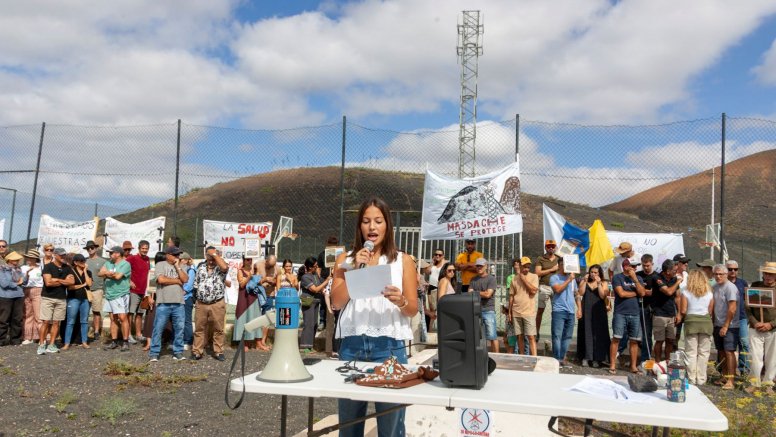
The residents of Masdache have publicly expressed their concern about what they consider to be a different institutional response from the Tías City Council regarding various projects affecting the municipality's territory and landscape.
As they explain, while the council presided over by José Juan Cruz Saavedra has enabled specific information and participation mechanisms for the residents of Mácher regarding the possible installation of a solar photovoltaic plant promoted by the Government of the Canary Islands, the residents of Masdache claim not to have the same tools to express their opinion on actions promoted by the City Council itself.
Among these actions, they cite the installation of a large telecommunications antenna and several considerably tall lampposts planned in the vicinity of Masdache, within the protected landscape of La Geria.
For this reason, they formally request that the City Council enable a specific space on its website where citizens can submit complaints, suggestions, documents, and objections related to these projects, similar to the procedure provided to the residents of Mácher in relation to the photovoltaic plant.
Likewise, they demand the opening of public service hours in the afternoon to facilitate the participation of those residents who, for work or family reasons, cannot go to the municipal offices during the morning.
The residents of Masdache believe they should enjoy the same rights as the rest of the municipality's citizens to express opinions, participate, and be heard in all decisions that involve the occupation, transformation, or alteration of land in a space as unique as La Geria.
In this context, they raise several questions about the criteria applied by the administrations regarding citizen participation, landscape protection, and territorial planning. Among them, they wonder why neighborhood mobilization is promoted against a photovoltaic installation promoted by another public administration, while the implementation of a telecommunications antenna and new infrastructure in a protected area is considered acceptable when these actions are promoted by the City Council itself.
They also question why some neighbors have greater channels of information and participation than others when they all belong to the same municipality, as well as the criteria that justify different positions on projects that affect the territory and landscape.
The neighbors argue that the same principles of landscape protection, administrative transparency, and citizen participation should apply to all projects regardless of the administration that promotes them.
Finally, they assure that they are not requesting privileged treatment, but equality of rights and opportunities to participate in decisions that affect their environment, as well as territorial management based on transparency, active listening, and respect for all population centers in the municipality.
"Masdache deserves to be heard with the same attention, consideration, and institutional respect as any other town in Tías," they conclude.
Add La Voz de Lanzarote as a preferred Google source.
Stay informed with the latest current news.