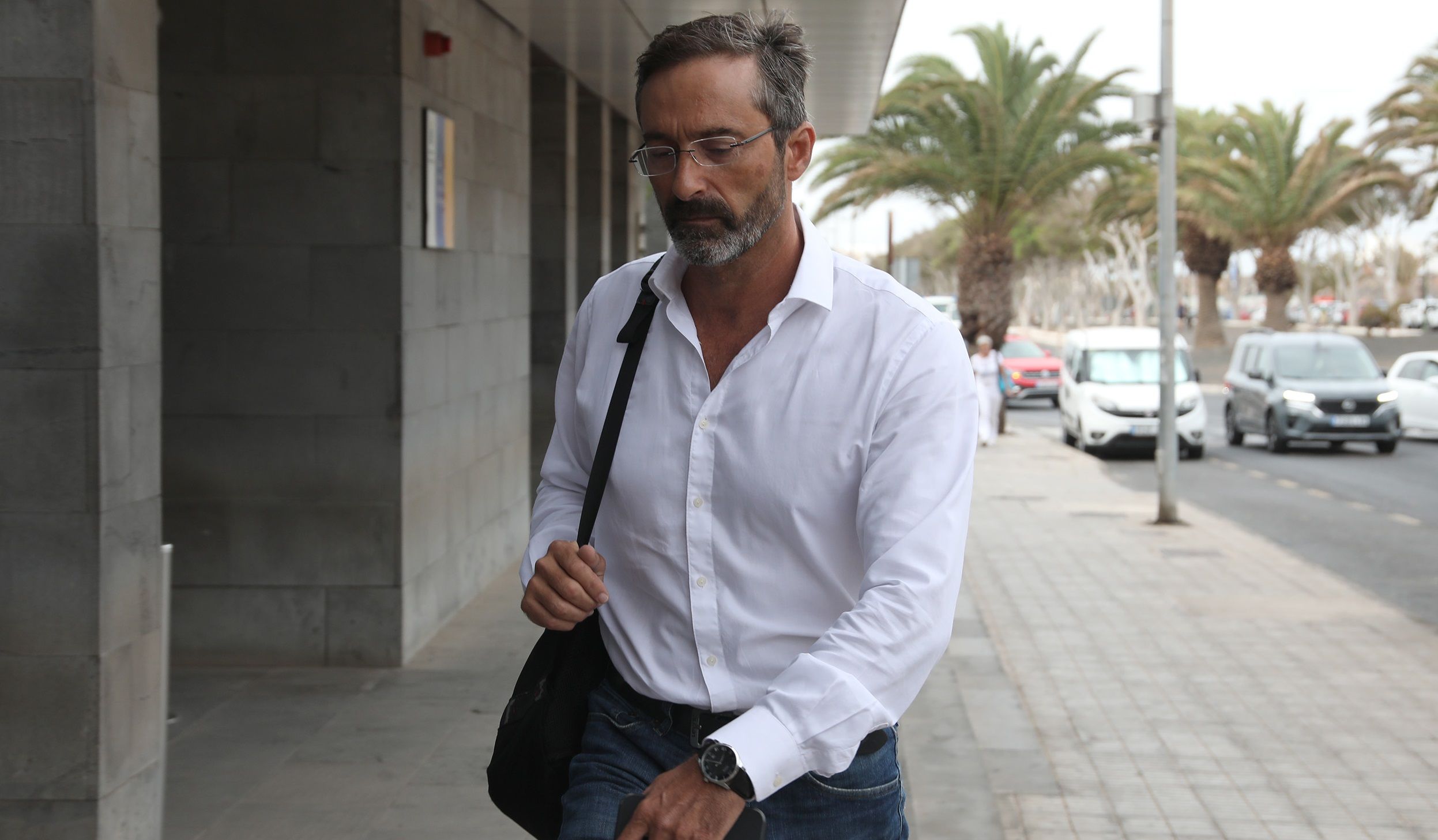
The Second Chamber of the Supreme Court has accepted the appeals filed by the Public Prosecutor's Office and the private prosecution, headed by Alexandra González, against the definitive dismissal and free dismissal of the case against Pedro San Ginés (Canarian Coalition) for false testimony and false accusation.
In addition, the High Court has given a period of five days for the parties to present allegations. The admission of both appeals comes after the Criminal Chamber of the Supreme Court rejected a few weeks ago the appeal for reconsideration filed against the dismissal of the same case.
In this new action, the Public Prosecutor's Office insisted that the complaint filed by Pedro San Ginés against Carlos Espino and the contracts of the Tourist Centers with Climafrical was a response to the complaint filed by Espino months before and that uncovered the largest political corruption plot in the Canary Islands, the Unión case.
The Public Prosecutor's Office continued to argue that San Ginés "orchestrated a false action", using police officers and "lying" in his judicial statements. In addition, he pointed out in his appeal that the accusations of the current Canarian senator were not only directed against Espino, but also against the businessman from Conejero and owner of Climafrical, Antonio González.
The events date back to Wednesday, November 11, 2009 at 10:30 p.m., when San Ginés appeared at the Civil Guard barracks in Costa Teguise to report Carlos Espino, Antonio González and José Manuel Páez for the contracts between the Tourist Centers and González's company, Climafrical.
Ginés did accuse Antonio González when he appeared at the Civil Guard headquarters in Costa Teguise that Wednesday, November 11, 2009 at 10:30 p.m.
The Prosecutor's Office states that since he filed the complaint, it can be "extracted" that San Ginés had "the intention of wanting to lie in a malicious way and with intentional subjectivism" to cause "damage" to Antonio González.
In addition, the Public Prosecutor's Office pointed out that something that calls his "attention powerfully" is that San Ginés relied on a report from the Canarian Coalition to file the complaint and not on a legal report from the Cabildo itself, of which he was president.
Add La Voz de Lanzarote as a preferred Google source.
Stay informed with the latest current news.