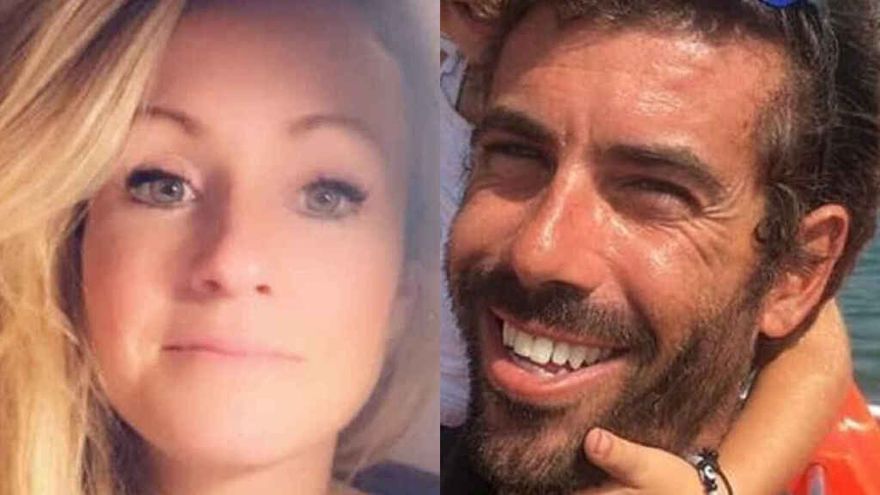
The alleged crime of the two girls from Tenerife kidnapped by their father will be processed as a case of gender violence. The judge investigating it, the presiding magistrate of the Court of First Instance and Instruction number 3 of Güimar (Santa Cruz de Tenerife), issued an order early this Saturday afternoon declaring her lack of knowledge about the proceedings, "because, according to the allegedly committed crimes for which there is already objective evidence, it corresponds to the Court of Violence against Women of Santa Cruz de Tenerife", as the mother of the little girls has her residence in this judicial district.
The judicial resolution, which puts an end to the secret phase of the proceedings - which means that the parties involved in the case will have access to the proceedings, for the moment the Public Prosecutor's Office and the mother of the girls - annuls the international search warrant for Tomás G. as the alleged perpetrator of a crime of abduction of minors, and modifies it to a request for two aggravated crimes of homicide (this is a preliminary classification and subject to variation) and one against moral integrity in the context of gender violence.
How and where
In a nine-page resolution that provides a detailed account of the facts based on the multiple pieces of evidence gathered during the 45 days of uncertainty, the judicial authority states that the most likely scenario is that the investigated party killed his daughters in his house in Igueste de Candelaria (Tenerife) on the evening of April 27, 2021, wrapped the bodies in towels, put them in garbage bags, and, putting these in turn in two sports bags, took them in his sports boat to the high seas, to an area he knew and knew was deep, and threw them into the water tied to an anchor by means of a chain and a rope.
In the opinion of the magistrate, Tomás G.'s idea when he took his daughters on the afternoon of April 27 "was not to take them away from their mother and environment to take them to an unknown location, but allegedly to kill them in a planned and premeditated manner, and this in order to provoke inhuman pain in his ex-partner, whom he deliberately sought to leave in uncertainty about the fate that their daughters had suffered by hiding their bodies, after killing them, at the bottom of the sea, choosing places far from the coast and deep, where he thought they would never be found, all after announcing, both to his ex-partner and to his close environment, that he would leave with the girls and that they would not see them again".
Cause of death
The judicial resolution reveals that the autopsy performed on Olivia on Friday morning determines in its preliminary report that she died "of violent death, with a medico-legal etiology compatible with homicide, being the immediate cause compatible with acute pulmonary edema [abnormal accumulation of fluid] of the lung". Chemical-toxicological, biological and histopathological studies are pending to complete the conclusions. "Although only Olivia's body has been located so far," the magistrate states, "the most probable factual hypothesis regarding Anna is, unfortunately, the same".
Machismo
The magistrate asserts that the background to the tragedy dates back approximately one year, when the relationship between Tomás and the mother of the girls broke down and the latter began a new sentimental relationship. "Since then, Tomás constantly treated his ex-partner in a humiliating and degrading manner," "directing daily disqualifying, offensive and outrageous comments at her, particularly focused on belittling her for having rebuilt her life with a new partner, repeatedly stating that he did not tolerate [her new partner] sharing moments with his daughters," she relates.
The order emphasizes that the investigated party's desire was to place his ex-partner "in uncertainty about the fate or destiny that Olivia and Anna had suffered in his hands, because, after repeatedly warning her that she would not see him or his daughters again, implying that he would flee with them to an unknown location, he devised the way in which he understood that their lifeless bodies would never be located, throwing them into the sea inside weighted bags and tied to an anchor, in a place expressly sought far from the coast and that he knew was deep, where the seabed could not be investigated, except by the special means with which the oceanographic vessel Ángeles Alvariño has, which is why its intervention was agreed".
The magistrate's resolution, which is transferred to the Public Prosecutor's Office for a report - among other issues on competence - is subject to appeal for reconsideration and subsidiary appeal.
Add La Voz de Lanzarote as a preferred Google source.
Stay informed with the latest current news.