Almost a thousand minors who arrived in the Canary Islands by pateras or canoes from January of last year until today have been sent to adult centers because they were wrongly registered as adults, as certified by subsequent tests, according to data from the Prosecutor's Office of the autonomous community.
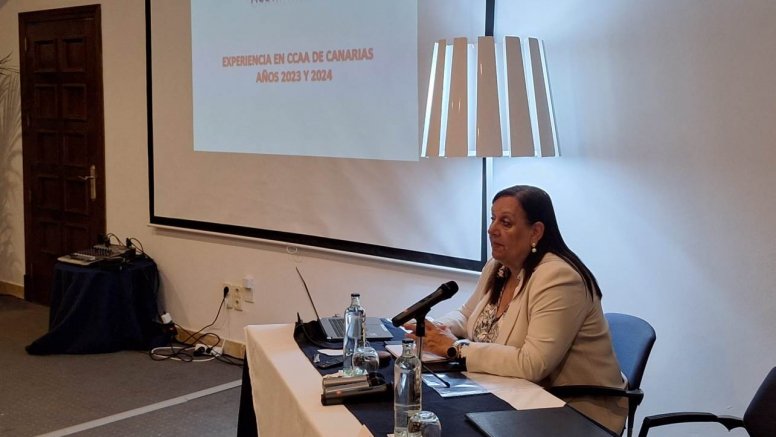
The Senior Prosecutor of the Canary Islands, María Farnés Martínez, explained this Tuesday in Lanzarote how progress has been made in the age assignment processes of the dozens of young Africans who arrive each month on the coasts of the Canary Islands, during the migration conferences that the Judiciary holds every year in the islands.
Martínez explained that last year about 2,900 migrants who could be minors were rescued in the Canary Islands, but whose age was not clear (this figure does not include those who were undoubtedly presumed to be children). With an addition that caused the year to be "chaotic": by August 31, only 600 had arrived, while the rest did so from September to December.
So far in 2024, 1,205 more minors have arrived in the Canary Islands. About 410 of them, there is no doubt that they are children; the rest have been subjected to tests or are pending to go through them.
The Senior Prosecutor of the Canary Islands has specified that, once the services were reinforced, they functioned relatively quickly, to the point that today there are only 63 minors who arrived in the Canary Islands in 2023 whose age has not yet been determined.
However, she has acknowledged that, in that process, almost 1,000 minors have been mistaken for adults: 523 last year and 442 so far in 2024, which is known, as she has detailed, because once in the centers for adults the children themselves stated that they were not yet 18 years old or the staff of those resources asked for their age to be reviewed. And in both cases it has been corroborated that they were minors.
In the final quarter of 2023, when the arrival of several daily canoes to El Hierro and Tenerife forced the transfer of the newcomers to the peninsula in a matter of days to decongest the reception network of the Canary Islands, several autonomous communities complained to the General Directorate of Child Protection of the islands that in the groups of adults there were also many minors, whose guardianship they had to assume from then on.
Although the casuistry is varied, the Senior Prosecutor has pointed out that two main problems have been detected: adolescents who pretended to be older because they had been advised by their families to do so (with the hope that they would be transferred quickly to the mainland or, even, that they would not be prevented from working) and boys who were wrongly registered as adults by the Police.
Asked about the agreement that the Government of Spain is negotiating with that of the Canary Islands to distribute the reception and guardianship of minors who arrive by pateras among all the autonomous communities, the Senior Prosecutor has acknowledged that, with more than 5,500 minors in the centers of the Canary Islands, they cannot be given the attention they deserve.
And she has pointed out that she is "concerned" that it is being considered in that negotiation to transfer the minors from the Canary Islands to the peninsula in a maximum of 15 days, once the reception capacity of the islands has been exceeded by 150% (this is something that the Government of Fernando Clavijo is proposing), because she believes that "there is no time" in two weeks to complete the tests to determine the minority of age.
"You cannot determine the age in 15 days. Those of us who work in this think that it can be dangerous to send minors to the peninsula without determining the age, especially when we can adopt measures to function quickly," she said.
The prosecutor does not even contemplate as an option that the tests be done in the community of destination, because she believes that there is a risk of "losing sight" of the minor, in the worst case, or of duplicating procedures and deadlines.
Add La Voz de Lanzarote as a preferred Google source.
Stay informed with the latest current news.