The Council of Ministers is expected to approve this Tuesday the decree that will toughen the criteria for creating new universities and that aims to prevent the proliferation of private higher education centers that do not meet the standards of excellence.
Currently, the Spanish university system (SUE) is made up of 96 universities – 50 public and 46 private – and the Executive's objective is for all of them to comply with a series of requirements to protect a university model that is committed to teaching and research.
Currently, there are eight university projects that will be affected since they are still awaiting the Ministry's report. In the Canary Islands, the Digital University UDDI, based in Tenerife and with a digital training proposal, hangs by a thread.
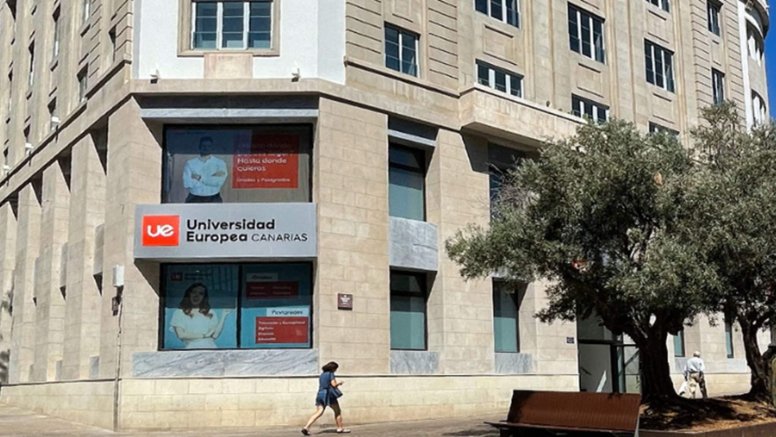
The UDDI is part of the Europa Education group, which includes the European University of the Canary Islands, with an on-site campus in La Orotava. If approved, it would be the third private distance learning university in the archipelago, after Hespérides and Tech, approved in March 2024.
In the rest of the country, three are still pending approval in Aragon (Universidad Internacional de Aragón UNIAR, The Power University, Universidad NCI Aragón); two in Extremadura (Universidad Europea de Extremadura, CEU Nuñez de Balboa); one in Andalusia (Universidad Internacional de Estepona Antonio Guerrero) and one in Asturias (Universidad Europea de Asturias).
According to the latest report from the Knowledge and Development Foundation (CYD), based on data from the Ministry, since the creation of the last public university in 1998, the number of private universities has almost tripled.
Six months ago, the President of the Government, Pedro Sánchez, announced his intention to curb the creation of "crony organizations" and reinforce the requirements to guarantee that universities have quality projects and are not "a vending machine for degrees."
The regulation has been made more flexible during its debate process with the autonomous communities, after receiving allegations from all agents of the educational community and also after reports from organizations such as the National Commission on Markets and Competition (CNMC) or the Council of State.
Binding reports from ANECA, minimum teaching load, students, and research
One of the objectives of the decree, which will come into force once it is published in the BOE -reforming the 2021 decree- is to strengthen the role of the National Agency for Quality Assessment and Accreditation (ANECA) and the quality agencies that evaluate university projects.
From now on, the reports they issue will be binding, and to reinforce their independence, a specific evaluation commission will be created, composed of a majority of university professors chosen by lottery.
The new regulation will also require a minimum of 4,500 students to be reached during the first six years from the start of the center's activity, although different compliance periods are contemplated, from 3 to 8 years, depending on whether the universities were already established in the last 3 years.
The territorial agencies will review the degree of compliance with this criterion and allow time to achieve it, even reducing the number of students required to 3,150 in some cases.
The decree also establishes that the promoters of new university centers demonstrate sufficient financial capacity from their opening. Therefore, they must present an economic guarantee equivalent to the university's budget in the third year of operation.
According to the latest draft from July, the decree could include other criteria, among them that the new centers must guarantee 10% of places for student accommodation within a certain period; that the teaching staff has 50% doctors or the obligation to attract in research projects at least the equivalent of 2% of its total annual budget within a period to be established.
Another key aspect of that draft was the minimum teaching offer that the new universities had to meet: ten official Bachelor's degrees, six official Master's degrees, and three official Doctorate programs in three different fields of knowledge.
Add La Voz de Lanzarote as a preferred Google source.
Stay informed with the latest current news.