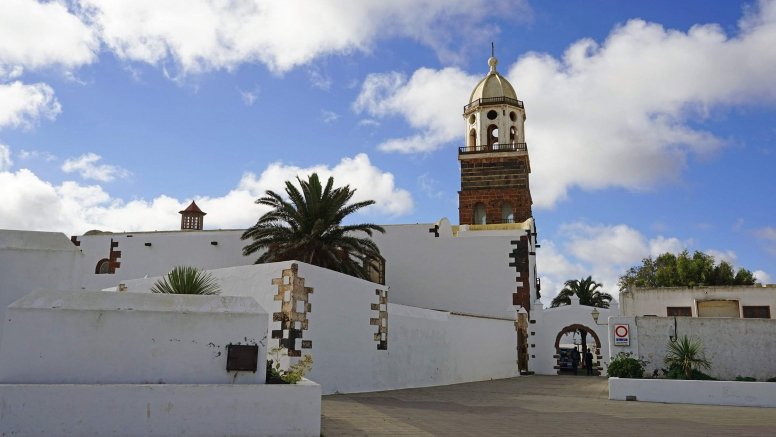
Within the framework of the World Day of the Most Beautiful Villages in Spain, which is commemorated this Wednesday, October 1, the Ministry of Tourism and Employment of the Government of the Canary Islands highlights the relevance of the future agreement of collaboration with the municipalities of Agulo (La Gomera), Garachico (Tenerife), Betancuria (Fuerteventura), Teguise (Lanzarote) and Tejeda (Gran Canaria).
These five municipalities are part of the national network of the Most Beautiful Villages in Spain, an association made up of 122 municipalities that works for the conservation, dissemination and promotion of the valuable rural, cultural and natural heritage of these destinations.
The document, which has had the active contribution of the five towns and is currently in the final phase, will establish a framework for joint action to promote tourism infrastructure projects that respect the uniqueness of each of these locations, promoting their sustainable development and improving the tourist experience without compromising their essence or identity.
The Minister of Tourism and Employment, Jéssica de León, assures that “the future agreement is aligned with the Canary Islands Strategy for Island Tourism Infrastructures and responds to the need to coordinate efforts between the Government of the Canary Islands and the town councils to rehabilitate and improve urban tourist spaces, guarantee the balance between heritage conservation and functional modernization, and promote a responsible tourism model that respects the environment and the quality of life of residents”.
In addition, she points out that “the projects that are developed under this agreement will have specific financing to ensure their effective execution”.
The general director of Infrastructure, Sustainability and Tourism Quality, Héctor Mateo, adds that “the execution of this agreement, which will be signed soon, is important to unify criteria and resources, but also guarantees that the actions are carried out under quality standards and respect for heritage”.
To achieve these objectives, the document includes eight priority lines of action that will guide the interventions to be carried out. These include strengthening the security and lighting of urban environments, burying electrical and telecommunications cables, visually integrating waste containers, and adapting access to parking areas.
Likewise, the creation and revitalization of green areas, the optimization of accessibility in streets and alleys, the installation of adapted public bathrooms, and the regulation of road traffic in the accesses to the historic centers are contemplated.
“From the General Directorate of Infrastructure, Sustainability and Tourism Quality we will provide the necessary technical and administrative support to assess that the projects presented by the town councils meet the defined objectives”, concludes Héctor Mateo.
Add La Voz de Lanzarote as a preferred Google source.
Stay informed with the latest current news.