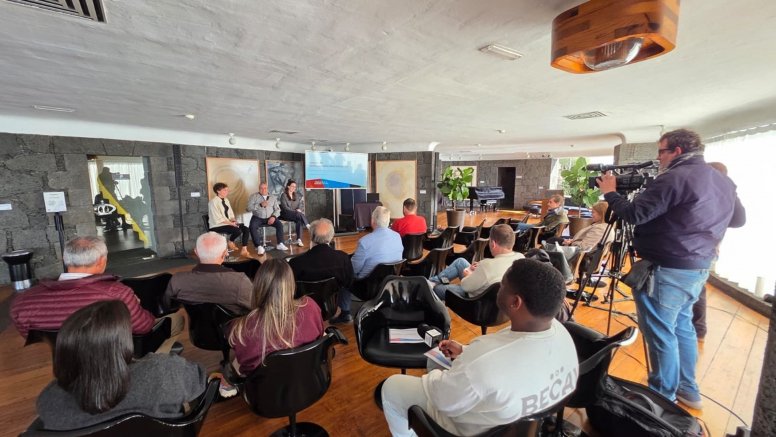
The Centers of Art, Culture and Tourism of Lanzarote have since this Wednesday, March 11, a Manual of Conservation and Maintenance that systematizes more than half a century of experience to guarantee the preservation of the spaces created by César Manrique.
The counselor of the Tourist Centers, Ángel Vázquez, the director of Conservation and Maintenance of the Entity, Elsa Armas, and the architect Marta de la Fe Cabrera, have presented this document during an informative conference held this morning at the Museo Internacional de Arte Contemporáneo, MIAC - Castillo de San José.
It is “much more than a list of actions,” they agreed to point out. “This Manual compiles and systematizes the techniques applied in the conservation of the Centers for more than half a century and defines the best solutions to preserve and protect the spaces created by César Manrique”.
“It is a milestone for the Entity and a tool that connects past, present, and future,” Ángel Vázquez pointed out, who highlighted “the role played by the Conservation and Maintenance team, which has contributed the knowledge and experience accumulated over decades.”
During the event, which was attended by several members of the Honorary Advisory Council of the Tourist Centers as well as representatives of the César Manrique Foundation, Vázquez explained that “the Manual is born from the responsibility we have in the conservation of these fundamental works to understand the transformation of the island during the last half century.”
In addition, he/she has thanked the “rigor and clarity” of the document's drafting team, “whose work allows us to have a Manual that guarantees a solid and sustainable future for this heritage of incalculable value that César Manrique gave to Lanzarote and to the people of Lanzarote”.
In the same vein, Marta de la Fe has highlighted that the objective of the Manual is “to guarantee the aesthetic coherence of the Centers created by Manrique based on the compilation of information linked to maintenance work”, with the aim of “standardizing the procedures and ensuring their application over time”.
Architecture, furniture, lighting and gardens
De la Fe has explained the most relevant aspects of a document that gathers all the elements of the visible and public access areas of the Art, Culture and Tourism Centers, and divides them into four groups.
Elements architectural visible, such as walls, walls, floors, carpentry, and coverings. Also equipment and furniture of public use: benches, railings, counters, bars, chairs, tables, and wastebaskets.
Thirdly, lighting and signage: luminaires, accessible wiring, evacuation systems and safety signage. Finally landscaped areas and landscape integration: native plant species, pest control and maintenance of volcanic stone in walkable areas.
The text is articulated around specific datasheets for each element and for common materials and treatments in which the guidelines for cleaning, conservation, and repair are detailed.
The Manual will allow for more systematic planning of the maintenance and conservation tasks of the Tourist Centers, guaranteeing the aesthetic coherence of the spaces conceived by César Manrique and their adaptation to the new challenges of the tourism industry.
Add La Voz de Lanzarote as a preferred Google source.
Stay informed with the latest current news.