The president of the Federation of Businessmen of Hospitality and Tourism (FEHT) of Las Palmas, José María Mañaricúa, stated this Tuesday that the collective agreement of hospitality workers in this province is the second most expensive in Spain after the Balearic Islands.
In response to the request made by the President of the Government of the Canary Islands, Fernando Clavijo, in the Debate on Nationality to raise the salaries of tourism business workers, Miñaricúa told EFE that "there are others that should be reviewed first" before those in his sector.
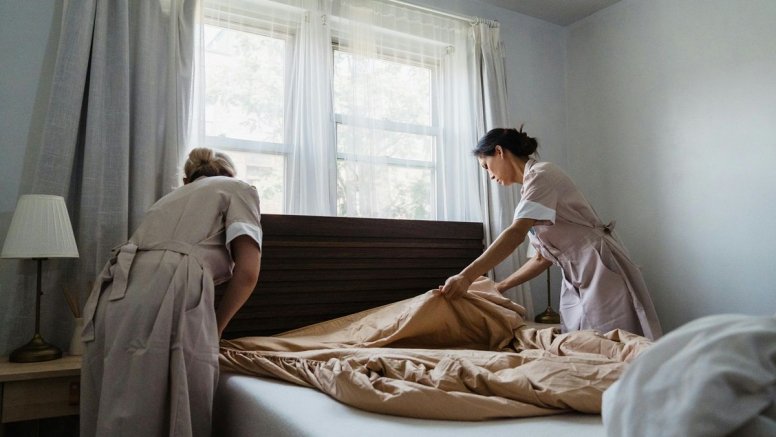
Specifically, he pointed out that the salary of the cleaners of the Parliament of the Canary Islands, who earn the minimum interprofessional wage, could be improved, as it is regulated by the office and office agreement, while a chambermaid in a four-star hotel earns 22,500 euros per year in the province of Las Palmas.
Mañaricúa emphasized that salaries in companies are governed by the collective agreement, as established in article 37 of the Spanish Constitution, which states that the law guarantees the right to collective labor negotiation between the representatives of the workers and the employers and "not other actors".
He recalled that the hospitality agreement of the province of Las Palmas was agreed in 2022 between the unions and the employers and a salary increase of 10.25% was agreed then in four years, with an increase of 3% in the first year, 2.5% in the following two years and 2.25% in 2025.
"We come from years in which a pandemic has been suffered, which forced a zero tourist activity" and as a result of that agreement, the aforementioned agreement was reached in a consensual manner "as always" and as it will be negotiated again, he argued.
The president of the FEHT also commented that the forecasts for tourist occupancy for Easter Week in Las Palmas are good, because it also coincides with the high season in the islands, compared to destinations in the peninsula where 60% of the accommodation establishments close in the winter months.
An occupancy of 85% is expected, which the local market helps to complete the beds that remain free, as traditionally happens, and people who have booked in advance will have better prices, said the president of the FEHT.
Add La Voz de Lanzarote as a preferred Google source.
Stay informed with the latest current news.