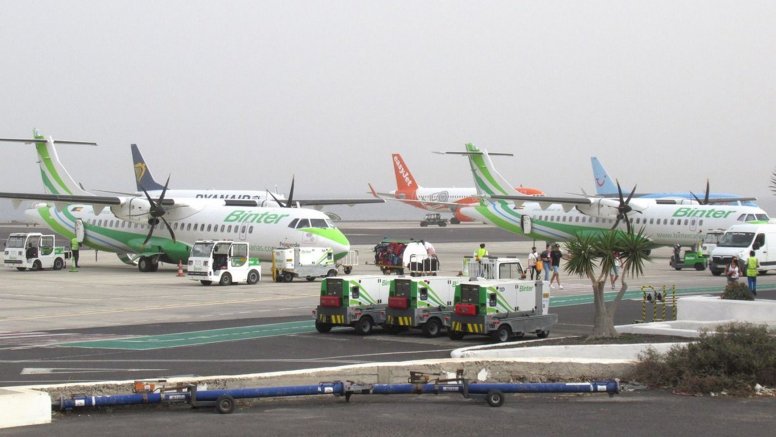
Flying from an ultra-peripheral island like Lanzarote is a structural necessity. Therefore, any modification to the playing field of community aviation has a direct and immediate impact on the islanders' pockets.
The recent revision of passenger rights regulations approved by the European Union simplifies processes and imposes a standard on controversial hand luggage, although it introduces regulatory trade-offs that benefit airlines in cases of delays.
The historic Regulation 261/2004 faced an urgent renewal. The post-pandemic era, the rise of online agencies, and the chaotic baggage policies of low-cost airlines had turned airports into a legal battlefield.
From now on, the starting price of flights will include the personal bag and the hand luggage. However, a reverse model is opened: users who decide to travel light will have the option of unchecking the suitcase (trolley) to reduce the cost of the ticket. This was not Spain's position, which insisted that both items be free.
For residents in Lanzarote, the unification of hand luggage ends the confusion and hidden prices on the numerous low-cost flights connecting César Manrique airport with the mainland and Europe.
What improves: end of the refund labyrinth
With the new regulations, a maximum period of 14 days is established for ticket refunds in case of cancellation, regardless of whether it was purchased on the official website or through an intermediary online agency.
Furthermore, airlines are obliged to offer a clear and digital channel to request money, prohibiting the practice of hiding the cash option to force the customer to accept a travel voucher.
The new guidelines, which are expected to be applied at the earliest from this coming autumn, also prohibit charging extras for the assignment of adjacent seats for minors under 14 years of age, who will be guaranteed to travel with their companions without this entailing any surcharge on the final bill.
What worsens: A legal loophole to avoid compensation
The pressures of the European aviation lobby have also left their mark. The main setback lies in the redefinition and expansion of what are considered "extraordinary circumstances" or force majeure events.
If the delay or cancellation is due to management failures of the control towers, saturation of general airspace or strikes by services unrelated to the airline, these will be exempt from paying the automatic economic compensations (which range between 250 and 600 euros and remain as before).
Likewise, the right to assistance, that is, accommodation, is limited in prolonged climate crisis scenarios: if an airport becomes inoperative for days, the companies will no longer pay for the hotel indefinitely, with a cap of three nights being set.
Thus, on an island like Lanzarote, recurrently exposed to strong calima or crosswinds, the expansion of "force majeure" margins could reduce the chances of collecting indemnities.
Add La Voz de Lanzarote as a preferred Google source.
Stay informed with the latest current news.