This year, Canarias celebrates the World Creativity and Innovation Day by mobilizing the technical team of Red CIDE to identify some of the projects with the greatest potential in the islands. The result is a "living map" of knowledge that reveals a Canarias that is technological, circular and deeply connected with its territory.
The Network of Business Innovation and Development Centers (Red CIDE) is the main ecosystem of support for innovation in the archipelago. A public network of free advice designed so that any company, self-employed professional or entity in the Canary Islands can convert their ideas into real and competitive projects, promoted by the Ministry of Universities, Science and Innovation and Culture of the Government of the Canary Islands, through the Canary Agency for Research, Innovation and the Information Society (ACIISI), and co-financed by 85% by the FEDER Canary Islands Program 2021-2027.
The map highlights initiatives that are already changing the reality of the islands. For example, in the socio-health field, Guillermo Pérez (Mentor Day) points to Forta Senior in Tenerife as the first specialized center for elderly with a transdisciplinary approach.
For its part, the circular economy comes to life in Gran Canaria with Musapiel, highlighted by Odil Torrent (AJE Las Palmas). This vegetable leather created from banana plant waste by Fibras Naturales Canarias is, according to Torrent, «a sample of how the local can lead global change».
The digitalization of commerce also has its own name: Somos Local. Felipe Lorenzo (ADER La Palma) highlights how this platform connects businesses and citizens in a digital ecosystem that strengthens the competitiveness of Palma's local commerce.
Beatriz Nieto (Ashotel) highlights La Laguna Gran Hotel as an example of innovation in cultural and creative tourism. Since 2023, the hotel promotes cultural experiences open to guests and the public, integrating creativity into its value proposition and differentiating itself in the market.
Trends: The AI as an engine of competitiveness
Artificial Intelligence (AI) emerges as the cross-cutting axis in all the islands. Kevin Cabrera (AJE Tenerife) and Jorge Ramírez (ATA Canarias) agree that AI has ceased to be a promise to optimize critical sectors such as healthcare and business communication, through the use of avatars that overcome geographical and linguistic barriers.
In the tourist sector, key for the Canarian economy, trends point to personalization and sustainability:
Management of flows: Rocío Estévez (Cámara de Comercio de Gran Canaria) proposes the use of AI to analyze visitor data and redistribute them, improving coexistence between tourists and residents.
Technological sovereignty: Daniel González (ASOLAN) highlights the rise of No-Code, which allows hoteliers to be architects of their own technology without depending on rigid software.
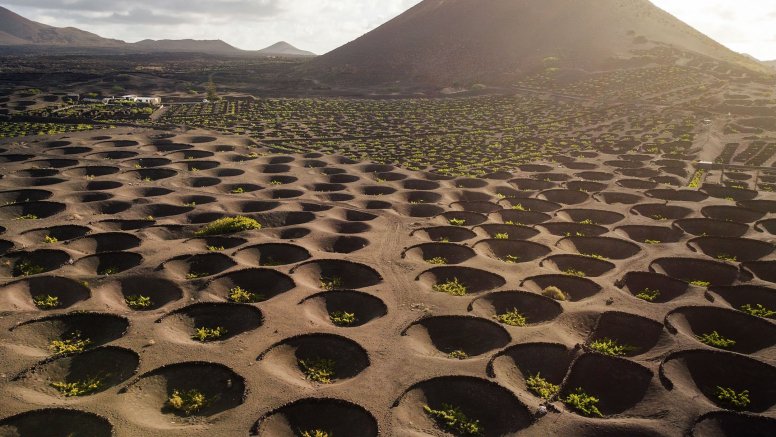
Wine-growing sustainability: Patricia Moreno (Cámara de Comercio de Lanzarote) puts the focus on the Lanzarotean wineries, which combine tradition and technology to protect the landscape of La Geria, acting as a «territorial anchor» of biodiversity and local economy.
And David García (FLB Las Palmas) highlights industrialized construction as a strategic future solution and a transformation engine for the sector, backed by the impulse of the PERTE de vivienda.
This brief X-ray of innovation demonstrates that the Canary Islands not only adopts technology, but adapts it to its singular needs. The Network of Innovation and Business Development Centers (Red CIDE) promoted by ACIISI, thus reaffirms its role as a strategic advisor for any innovative project in the eight islands.