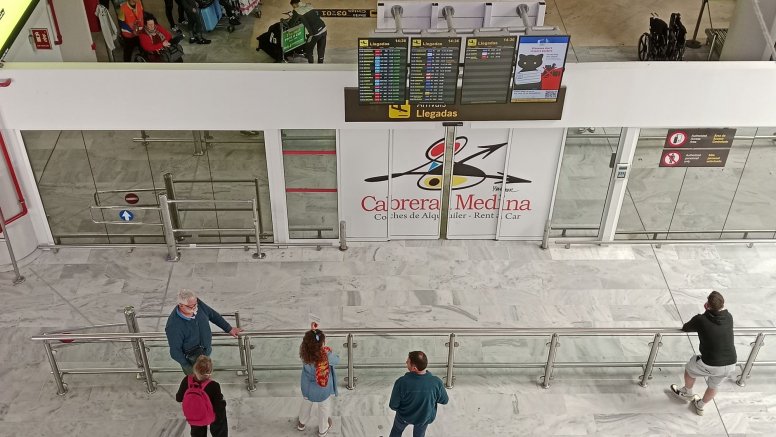
The airport manager Aena will invest 327.4 million in Lanzarote airport between 2027 and 2031, according to the third Airport Regulation Document, which defines the economic and regulatory planning of the Spanish airport network for that time period and which has been released by Aena.
Of said investment, a total of 144 million will be dedicated to the expansion of the Lanzarote airport.
The disbursement for Lanzarote is much higher than that of the previous period, between 2022 and 2026, when Aena invested 39 million euros in César Manrique.
The set of the Canary Islands airports will receive an investment of 1.8 billion euros between 2027 and 2031.
The reforms of César Manrique aim at the expansion of check-in counters and area, security and passport controls, to waiting areas for boarding and number of gates (generating two boarding zones, one for Schengen traffic and another for non-Schengen), expansion of the baggage claim hall and belts, and the improvement of passenger services.
On the other hand, investments in Lanzarote airport seek to improve the passenger experience, creating "a new identifying architectural symbol of the island of Lanzarote (with a unique roof), improvement of the interior image of the spaces, as well as accessibility and intermodality". Visually, the design will take into account the island's own aesthetic.
The reform will mean almost doubling the spaces current ones as, in addition, the two terminals are joined, maintaining a dedicated zone for inter-island flights, as is currently the case.
It concerns actions that consider not only actions on terminals, but also the expansion of aircraft parking platform.
Increase in tariffs to finance the plan
To undertake this investment wave, Aena has proposed an average annual increase in the tariff for the Canary Islands Airports of "less than 30 cents and which, even, will be less when the incentives in force are applied. These amounts are less than 10 cents for inter-island flights".
The regulated (non-commercial) investments included in the DORA proposal have been debated in the mandatory consultation process with airlines and users for 5 months.
After approval by the Aena Board of Directors, the document has been sent to the DGAC (General Directorate of Civil Aviation) and the CNMC (National Commission on Markets and Competition). T
It will also be presented to the Airport Coordination Committees of the autonomous communities, which will be convened by the DGAC, to continue its processing until the approval of the definitive document by the Council of Ministers, which will be, at the latest, in September.
Aena's general objective is to provide Spanish airports with “the necessary capacity to meet future traffic demand, ensure that the highest requirements for safety and maintenance are met, the best quality indicators for passengers and airlines and sustainability for the environment, while maintaining competitive fares”.
Add La Voz de Lanzarote as a preferred Google source.
Stay informed with the latest current news.