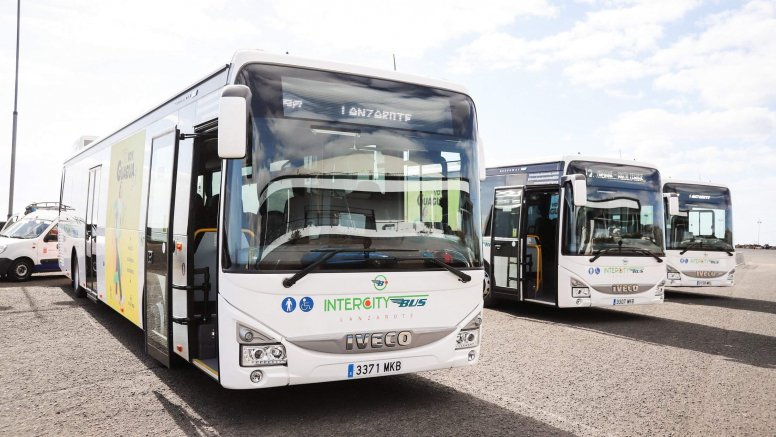
The Ministry of Public Works, Housing and Mobility of the Government of the Canary Islands, through the General Directorate of Transport and Mobility, headed by María Fernández, has initiated the process of public display of the draft Sustainable Mobility Law of the Canary Islands, a pioneering regulation that will comprehensively regulate transport and mobility in the Archipelago and that "is distinguished by having been born from an exercise of unprecedented citizen participation."
The future law will establish a common framework at the regional, island and municipal level, planning and regulating all measures in the field of mobility, from land, sea and air travel, to their interconnection and the infrastructures that support them.
The objectives are to guarantee the right to sustainable and accessible mobility, reduce emissions, improve the health of the population and strengthen public transport and active modes such as walking or cycling.
The draft also arises in coherence with the Declaration of Climate Emergency in the Canary Islands (2019), the UN 2030 Agenda, the European Green Pact and the Canary Islands Climate Change Law (2022), recalling that transport is responsible for 41.9% of greenhouse gas emissions in the islands.
The General Director of Transport and Mobility, María Fernández, has highlighted that “this draft is a milestone because, instead of waiting to have a draft, a previous dialogue with citizens and social agents was initiated, who have participated from phase zero, even before a draft existed. This makes it a unique process in the Canary Islands, more inclusive, transparent and participatory.”
In this sense, she stressed that “the Canary Islands is an ultra-peripheral and unique territory, and that is why this law will reflect the reality of each island. We have traveled throughout the Archipelago holding technical and citizen roundtables so that it is a democratic, useful regulation that puts the Canary Islands at the forefront.”
Sustainable mobility, a citizen's right
The General Directorate of Transport and Mobility seeks to articulate a hierarchical system for the organization of mobility and infrastructure, fully integrated with the urban, territorial and environmental planning of the Canary Islands. To this end, the text contemplates the establishment of stable financing parameters, the definition of operating ratios for collective public transport and the guarantee of a basic portfolio of road and guided transport services on all the islands.
In addition, it provides for measures such as exclusive bus lanes, dissuasive parking lots, interchanges, promotion of intermodality and tax bases that encourage the transition towards sustainable vehicles and systems, together with the regulation of transport concessions.
The regulation recognizes for the first time the right to sustainable mobility as a citizen's right, while defining the obligations of users to guarantee safe and responsible use of infrastructure. It also contemplates the importance of maintaining the Mobility Laboratory, created in this legislature, which functions as a body in charge of promoting pilot projects, innovative solutions and new technologies.
It also incorporates digitization and open data measures, with databases of mobility services and infrastructure, to improve management and coordination between Administrations.
From an economic and social point of view, the law is conceived as a framework regulation to modernize mobility in the Canary Islands. In this sense, it will reduce the costs associated with congestion and pollution, promote competitiveness and sustainable tourism, and open up opportunities for green employment, the electrification of transport and technological innovation.
Add La Voz de Lanzarote as a preferred Google source.
Stay informed with the latest current news.