This Monday, March 16, begins the process of prior public consultation of the draft Law on Coastal Management and the Canarian Coasts, a regulation that aims to adapt the basic state framework in coastal matters to the territorial, environmental and socioeconomic singularities of the archipelago.
The proposal responds to the mandate contained in article 157 of the Statute of Autonomy of the Canary Islands, which attributes to the Autonomous Community the exclusive competence in matters of coastal planning and management, respecting the general regime of the maritime-terrestrial public domain.
The Director General of Coasts and Management of the maritime space, Antonio Acosta, has highlighted that “the initiative seeks to provide the Canary Islands with its own regulatory framework that allows managing the coast in a way adapted to its particularities after the transfer of powers in 2023. The future law aims to balance economic and social development with the protection of ecosystems and natural resources of the coast, guaranteeing its sustainability”.
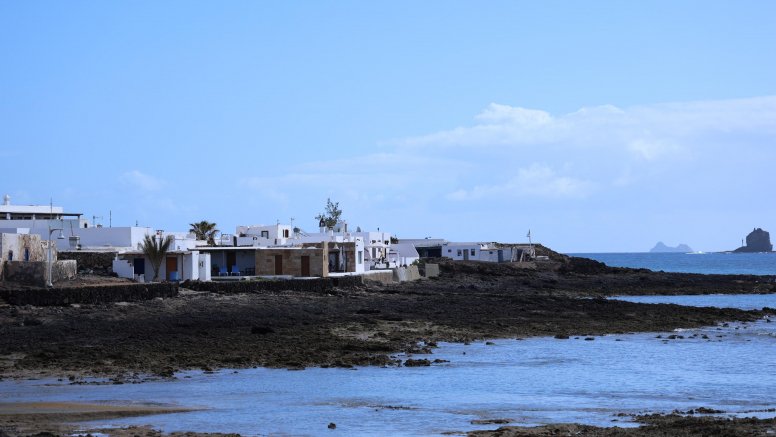
The Canary Islands coastline, which extends along 1,126 kilometers and presents a discontinuous configuration typical of an archipelagic territory, concentrates an essential part of the resident population and of the main economic activities, especially those linked to tourism. At the same time, it harbors marine biodiversity of great value and fragility, which requires differentiated management close to the territory.
The objective of the future regulation is to specify and adapt the determinations of the basic state legislation to the island reality, to fully integrate coastal management into the environmental, territorial, and urban planning of the Canary Islands and to establish a clear jurisdictional and procedural framework that strengthens legal certainty. All this from the premise of achieving an effective balance between environmental protection and the maintenance of social and economic activities that historically take place on the coast, in an island context where it is not feasible to generally displace said activities inland.
The law will be inspired by the principles of sustainable development, integrated coastal management, priority conservation of coastal ecosystems, adaptation to climate change, citizen participation, and consideration of the best available scientific evidence. Likewise, it will address the appropriate distribution of powers between the autonomous administration, the island councils, and the municipalities, guaranteeing a coherent planning of a territorial space that, even being insular and discontinuous, requires an integral and coordinated vision.
The period for prior public consultation will remain open for one month, until April 16 2026, through the Citizen Participation Portal of the Government of the Canary Islands, so that citizens and representative organizations can send their contributions before the final drafting of the preliminary bill.
Add La Voz de Lanzarote as a preferred Google source.
Stay informed with the latest current news.