Spain will distance itself from a Europe currently dependent on foreign gas – the United States exports up to 60% of the liquefied natural gas that arrives on the Old Continent – and could aim for an electricity price of 20 euros per megawatt hour for next March, which would become the second cheapest since 2010.
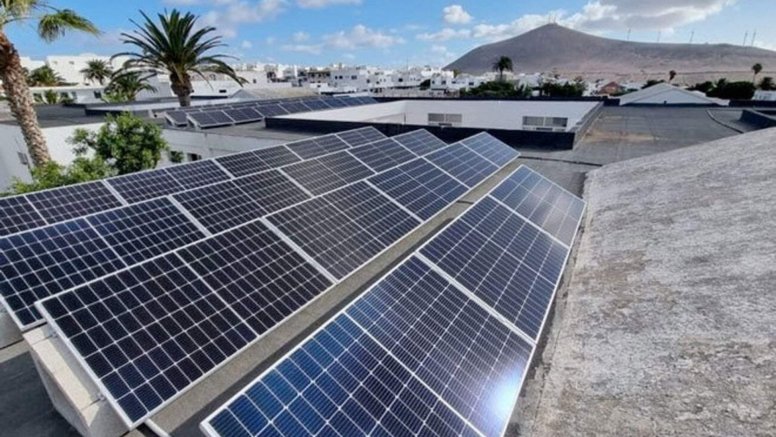
A hydraulic energy boosted by recent rains, a solar installed almost equivalent to the national demand peak (40,889 megawatt-hours), and a strong wind in general terms, position Spain as the continent's potential competitive exception in the spring of 2026.
According to the CEO of the energy consulting firm Tempos Energía, Antonio Aceituno, "Europe is in an alarming situation with regard to its gas reserves, standing at around 40%, the lowest seasonal level since 2022, but Spain is not experiencing the same tension".
“In our country, the rains have sunk prices in the short term, the latest February futures have settled at eight-month lows with 50.75 euros per megawatt-hour and the market is beginning to anticipate a historic spring downwards”.
With 10.1 gigawatts of renewables connected in 2025, Spain has confirmed its transition to independence from combined cycles. In fact, energy demand during this first part of 2026 has not plummeted; on the contrary, it has risen slightly from 29,016 megawatt-hours in December to 29,422 megawatt-hours in January (+1.4%)"The pool is not falling because the country consumes less, but because the mix has radically changed, resulting in a bill that no longer depends solely on how much is consumed, but on what the generating energy is during each critical hour," Aceituno pointed out.
With respect to the international panorama, the United States has become the new epicenter of risk. Its domestic demand has reached 156 billion cubic feet per day (about 4.4 trillion cubic meters daily) and the market already discounts that, in the face of possible extreme cold episodes, the North American country could cut exports just when Europe needs them most.
Therefore, the director of Tempos Energía has insisted that “the real European problem is not the winter cold, but the great structural challenge for this year: replenishing the cushion of gas reserves before next winter, competing for every shipment of liquefied natural gas”.
Given this situation, the most probable scenario indicates a tense stability, with a 'TTF' indicator situated between 38 and 41 euros per megawatt-hour (an 83% increase compared to 2024), which in turn would consolidate a structural premium with CO2 contained between 82 and 87 euros per ton, reinforcing the thermal floor
Add La Voz de Lanzarote as a preferred Google source.
Stay informed with the latest current news.