Canarias is preparing a legislative initiative through the Dirección General de Costas y Gestión del Espacio Marítimo Canario, to have a regulation that regulates coastal territorial management.
The proposal is part of the Legislative Program of the XI Legislature (2023-2027) and responds to the mandate included in the article 157 of the Statute of Autonomy of Canarias, which attributes to the Autonomous Community the exclusive competence in matters of coastal planning and management, respecting the general regime of the maritime-terrestrial public domain.
The initiative aims to adapt the basic state framework on coastal matters to the singularities of the archipelago, after the effective transfer of means and services in 2023.
Until now, management has been carried out in accordance with state regulations, without a specific adaptation to the territorial, environmental, and socioeconomic reality of the islands. With this future law, the Executive intends to equip itself with its own legal instrument that harmonizes economic development and social with the preservation of natural resources and marine ecosystems, guaranteeing levels of pressure compatible with the environmental health of the coast.
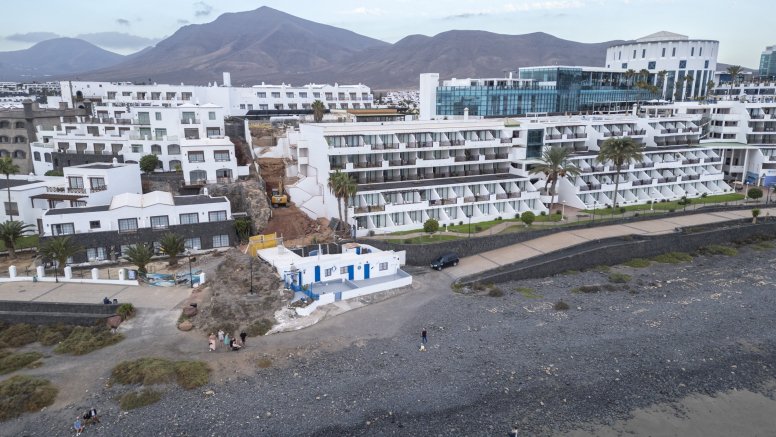
The Canarian coastline, which extends along 1,126 kilometers and presents a discontinuous configuration typical of an archipelagic territory, concentrates an essential part of the resident population and the main economic activities, especially those linked to tourism. At the same time, it harbors marine biodiversity of great value and fragility, which requires differentiated management close to the territory.
The objective of the future regulation is to specify and adapt the determinations of the basic state legislation to the island reality, to fully integrate coastal management into the environmental, territorial, and urban planning of the Canary Islands, and to establish a clear jurisdictional and procedural framework that reinforces legal certainty.
The law will be inspired by the principles of sustainable development, integrated coastal management, priority conservation of coastal ecosystems, adaptation to climate change, citizen participation and consideration of the best available scientific evidence. Likewise, it will address the adequate distribution of powers between the autonomous administration, the island councils and the municipalities, guaranteeing a coherent planning of a territorial space that, even being insular and discontinuous, requires an integral and coordinated vision.
With the taking into consideration by the Governing Council, the procedure for the drafting of the draft bill is formally initiated, with the aim that Canarias has its own regulatory framework that allows to fully exercise its powers in terms of coastal planning and management from institutional proximity and environmental responsibility.
Add La Voz de Lanzarote as a preferred Google source.
Stay informed with the latest current news.