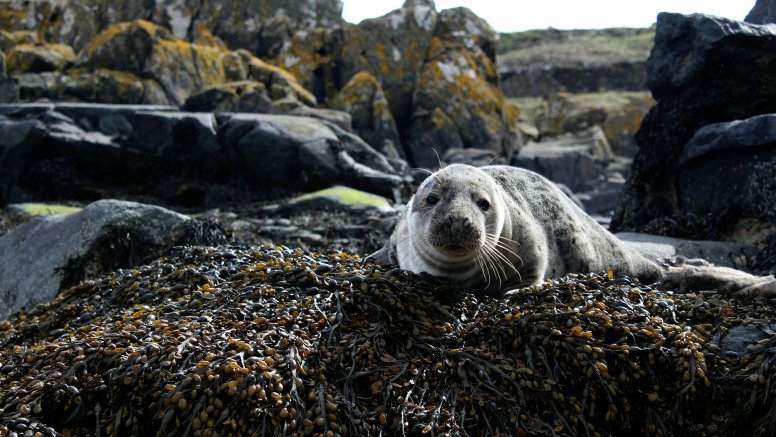
The University of Las Palmas de Gran Canaria (ULPGC) is investigating the zoonotic jump of avian influenza after confirming that sea lions and at least one person were affected by the same variant of the virus, A(H5N1).
The work analyzes that if the virus has been able to pass from marine mammals to humans, this means that it can jump species and, therefore, is zoonotic, which increases its pandemic potential, the University explained in a statement this Monday.
"Although there is no evidence of human-to-human transmission, the case is concerning to researchers as it shows that the virus appears to have been transmitted in a sustained manner **among marine mammals** thanks to mutations that have allowed it to adapt to these hosts," the note indicates
The work, published by the journal Science, was carried out by doctoral student Mauricio Ulloa from the Institute of Animal Health and Food Safety (IUSA) at ULPGC, under the supervision of Professor Antonio Fernández, as well as professors Giovanni di Guardo (University of Teramo) and Víctor Neira (University of Chile).
The University has pointed out that veterinarians are calling for this problem to be addressed from "a comprehensive and unifying approach whose objective is to balance and optimize the health of people, animals, and ecosystems, given the close interdependencies between the three areas".
The IUSA, consolidated as a reference center for marine animal health, has been chosen as a collaborating center of the Global Wildlife Health Network, configuring itself as a node in the Atlantic and the southern gateway to Europe, with the objective of promoting this approach, the statement explains.
Likewise, it participates in the VIGIA Network of the Government of the Canary Islands (Directorate General of Biodiversity) for the investigation of causes of death in wild fauna
Avian influenza appears similar to classic flu, with symptoms including cough, difficulty breathing, fever, malaise, or sore throat, but its severity depends on the type of virus and the level of infection, and in some cases, may require hospitalization and can even be lethal.
Add La Voz de Lanzarote as a preferred Google source.
Stay informed with the latest current news.