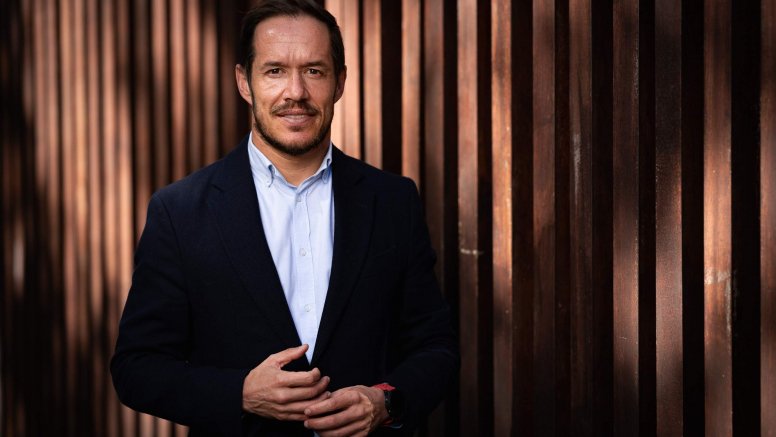
The Minister of Ecological Transition and Energy of the Government of the Canary Islands, Mariano Hernández Zapata, participated this Wednesday in the V Forum on Ecological Transition in the Canary Islands, organized by Tribuna de Canarias at the Museum of Nature and Archaeology (MUNA) in Santa Cruz de Tenerife. This fifth edition became the first meeting held in the archipelago specifically dedicated to analyzing the challenges and opportunities of energy recovery.
During his speech, the minister defended the need to address waste management from a technical, economic, and environmental perspective, advocating for energy recovery as a key tool to move towards a real circular economy and respond to two of the main challenges facing the Canary Islands: waste management and energy security.
“The Canary Islands cannot continue burying waste that can be converted into energy and employment,” stated Zapata, who insisted that “protecting the environment and generating economic opportunities are not incompatible objectives, but rather complementary ones.”
In this regard, he recalled that the European Union sets the objective for 2035 that only 10% of municipal waste ends up in landfills, while the Canary Islands are currently very far from that goal. “Today we are sending more than 67% of our waste to landfills, while island territories with similar characteristics to ours, such as the Balearic Islands, have managed to reduce that figure to 6% thanks to a determined commitment to modern treatment and recovery infrastructures,” he explained.
The minister highlighted that this difference evidences the need to accelerate the transformation of the waste management model in the islands. “We are not just burying garbage; we are burying raw materials, energy, and opportunities for economic development and employment for the Canary Islands,” he pointed out.
Likewise, he defended the model of “pragmatic environmentalism” promoted by the regional Executive, based “on common sense, science, innovation, and economic viability,” and assured that the ecological transition represents an opportunity to boost the reindustrialization of the Canary Islands, attract investment, and generate economic activity linked to the circular economy.
During his speech, Zapata also linked energy recovery to the need to strengthen the archipelago's energy sovereignty. In this regard, he recalled that the Canary Islands continue to be one of the territories most dependent on fossil fuels, as nearly 96% of the primary energy consumed on the islands still comes from fossil sources.
“In an international context marked by energy uncertainty, we cannot afford to depend almost exclusively on imported fuels to guarantee the electricity supply for our homes, hospitals, industries, or educational centers,” he stated.
Therefore, he explained that energy recovery can contribute to transforming a portion of the waste that currently ends up in landfills into manageable electricity for the island systems, helping to reduce external energy dependence and move towards a more sustainable and resilient model.
The minister also highlighted the work being carried out by the Ministry to promote comprehensive resource planning, emphasizing the technical feasibility study commissioned by the department to analyze the integration of waste, water, and energy management within a circular economy model adapted to the island reality of the Canary Islands.
For his part, the Director General of Environmental Quality of the Government of the Canary Islands, Ángel Montañés, stressed that “the roadmap to turn around the current situation in the waste problem involves starting to plan, correctly and specifically in the Canary Islands, in order to carry out energy recovery.”
Alongside the institutional intervention, the forum also hosted a specialized technical panel on energy recovery in which Ángel Montañés himself participated; the Director General of Gipuzkoako Hondakinen Kudeaketa (GHK), César Gimeno; the Director of Moeve in the Canary Islands, Carlos Giner; and the Deputy Director of Waste and Plastics at Veolia, Beatriz Castillo.
This space allowed for the analysis of successful experiences developed in other territories, as well as the opportunities offered by energy recovery to reduce waste disposal, generate resources, and contribute to the transition towards a more circular and sustainable economic model.
The V Forum on Ecological Transition in the Canary Islands brought together institutional representatives, experts, companies, and professionals from the sector to debate the role of energy recovery as one of the key tools to face the archipelago's environmental, industrial, and energy challenges.
Add La Voz de Lanzarote as a preferred Google source.
Stay informed with the latest current news.