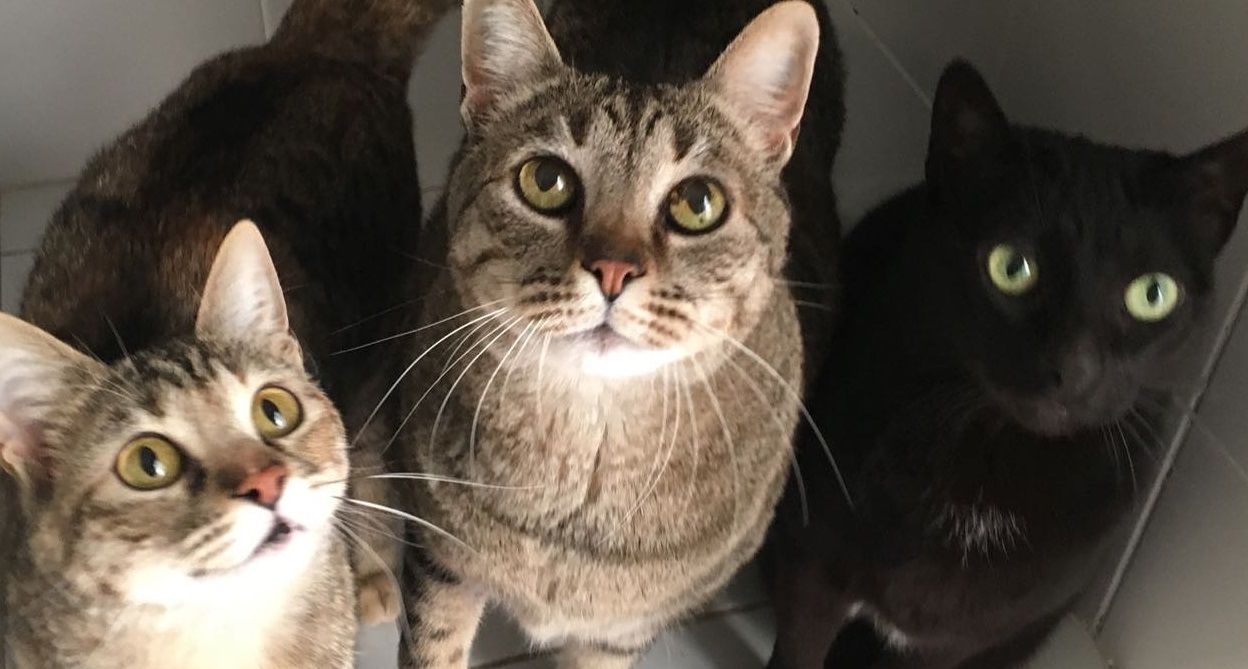
The 'Association for the Conservation of Biodiversity of the Canary Islands' (ACBC) has expressed this Wednesday its "frontal" rejection of the implementation of feline colonies "without taking into account conservation criteria", which in its opinion represents a "serious threat" to the archipelago's wildlife.
The association points out in a statement sent to EFE that on November 3 it sent the Government of the Canary Islands a proposal that includes the places where feline colonies "could not" be established, as well as criteria for their management, "without having received a response so far".
"The impact of feline colonies on other species is very serious, so their regulation is urgent," says the ACBC, which also points out that its "proposal was sent to the Canarian Executive" after the meeting held on September 17 with the Minister of Agriculture, Livestock, Fisheries and Food Sovereignty, Narvay Quintero, as well as with the heads of Livestock and Animal Welfare of the Government of the Canary Islands.
"We committed to sending a proposal for the regulatory development of article 40 of the Law on the protection of the rights and welfare of animals, and we included the criteria for the definition of feline colony management procedures to avoid the significant effects of the individuals that inhabit these colonies on the surrounding biodiversity, but we did not get a response," the association laments.
Although management criteria have not been established, the Ministry of Social Rights and Agenda 2030 has granted subsidies to the town councils of Icod de los Vinos (97,500 euros), El Sauzal (30,161 euros) and Buenavista del Norte (19,153 euros), in Tenerife, as well as to the Cabildo de Gran Canaria (92,900 euros), for the population control of feline colonies through the Capture-Sterilization-Return (CER) method, as published in the BOE on January 11.
In this regard, the ACBC recalls that it has expressed its "rejection" of the adoption of the 'CER method' for the control of feline colonies in open, unfenced spaces because, it assures, "its ineffectiveness has been proven and its implementation in the Canary Islands constitutes a threat to numerous species of native fauna." Despite this, the political parties promoting the Law rejected the association's alternative proposals and "the aforementioned method has been assumed," it laments.
For the ACBC, "it is necessary to make it clear that, even if cats are properly fed, they instinctively prey on wild species, which is especially serious in island territories due to the high number of endemisms and threatened species they harbor."
According to its data, cats prey on more than 2,080 species in the world, of which 347 (16.6%) are at some risk of conservation. In island ecosystems, cats consume 797 species, of which 25% are threatened. In the Canary Islands, more than 60 species are part of their diet, including the giant lizards threatened with extinction from La Gomera, El Hierro and Tenerife, and the blue chaffinch from Gran Canaria.
Specifically, cat colonies in open spaces cause a "strong impact" on wildlife, both in urban and rural environments, where they prey on lizards, skinks, geckos, canaries, blackcaps, warblers, blackbirds and sparrows, among others, many of them also protected by law, it continues.
For this reason, it reiterates that "it is essential and urgent that the Government of the Canary Islands regulates the implementation of feline colonies," and asks to develop "without further delay" the criteria for the definition of management procedures with the aim of avoiding "the significant effects of the individuals that inhabit these colonies on biodiversity."
Add La Voz de Lanzarote as a preferred Google source.
Stay informed with the latest current news.