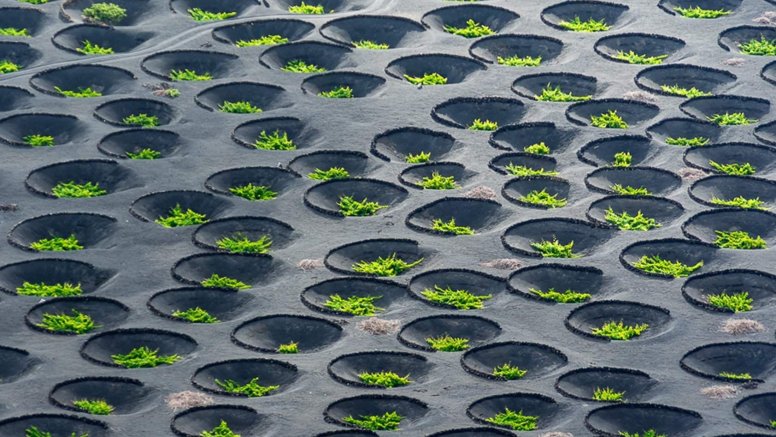
The Ministry of Agriculture, Fisheries and Food has announced this Friday the prohibition of import and transit to the Canary Islands of fruits (except table grapes) and vine seeds (Vitis L. partim) from countries where phylloxera is present, with the aim of reinforcing the protection of the Canary Islands vineyard, a request made by the Government of the Canary Islands with the purpose of preserving the wine heritage of the Islands and preventing the dispersion of this harmful organism.
The Minister of Agriculture, Livestock, Fisheries and Food Sovereignty of the Government of the Canary Islands, Narvay Quintero, has positively valued this decision as "an essential action to shield the Archipelago against the entry of risk elements in accordance with the phytosanitary measures for the control and eradication of this insect included in the order of the Autonomous Executive establishing immediate precautionary phytosanitary measures to prevent its spread.
The Ministerial Order that includes this measure is expected to be published tomorrow, Saturday, August 30, in the Official State Gazette (BOE) and will enter into force the day after its publication. This regulation responds to the request made from the Canary Islands after the detection of an outbreak of phylloxera on the island of Tenerife, confirmed by the National Reference Laboratory for the Identification and Diagnosis of Nematodes and Phytopathogenic Arthropods of said state department.
Quintero thanked the Government of Spain for its willingness and response to this situation, "the result of coordinated work between the administrations and the Canary Islands wine sector, which have acted immediately, in a coordinated manner and with responsibility since the detection of the organism to control and eradicate it, for which it is essential to contain its possible advance."
In this sense, he recalled that the Government of the Canary Islands, in collaboration with the Cabildo of Tenerife, continues to carry out field surveys on the island to determine the extent of the insect and work to eliminate it and treat the affected plants, as well as "an important work of information and awareness to producers and citizens in general, in collaboration with local administrations."
The Minister also highlighted that the Canary Islands has a special phytosanitary status recognized through the Order of March 12, 1987, which establishes for the islands the phytosanitary regulations relating to the import, export and transit of plants and plant products, "which we must strengthen to prevent the entry of pests."
Add La Voz de Lanzarote as a preferred Google source.
Stay informed with the latest current news.