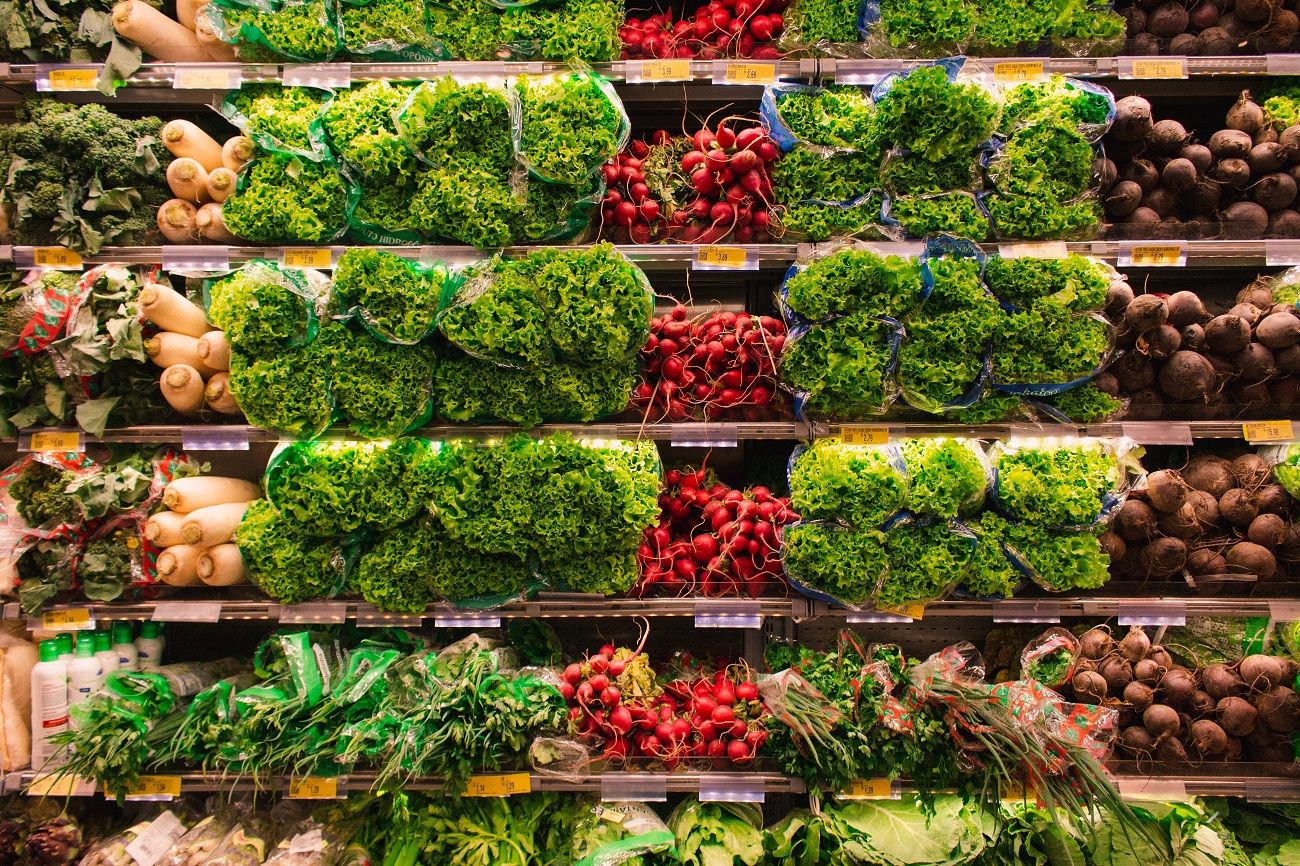
The Ecocomedores program that is being developed in Canary Islands in a pioneering way and offers organic fruit and vegetables to a total of 119 schools on the islands is a tool to fight against childhood obesity in the archipelago, where 45.8% of children between six and nine years old are overweight.
Diet plays a crucial role in addressing childhood obesity, a pathology that the World Health Organization (WHO) has declared the 'epidemic of the 21st century', and this is the reason why this program arises, whose main objective is to improve the quality of food in school canteens by facilitating the consumption of organic, fresh, local and seasonal products.
According to the latest data from the Ministry of Health of the Government of the Canary Islands, made public on July 31, 2024, the child population of the Canary Islands between six and nine years old reflects a prevalence of excess weight of 45.8%, 2.8% more than in the 2019 study; an overweight of 26.3%, compared to 24.5% in 2019, and an obesity of 19.5%, that is, 1% more than in the 2019 study.
Therefore, sources from the Ministry of Health have stated to EFE that the prevention of obesity is a priority for the regional executive due to the high prevalence in the islands, where the Ecocomedores program was implemented in a pioneering way in the 2013-2014 academic year also in order to promote and enhance the development of organic agricultural production.
It started in seven schools and now a total of 119 centers participate in this program, all public, except for one subsidized and two private ones, which have detected the importance of food being "another subject, and of relevance", said the coordinator of the program, Margarita Hernández, in an interview with EFE.
As she has detailed, this year one hundred percent of the public centers with direct management of their canteens by the Government of the Canary Islands will be part of it, although there is still work to be done in those that have the kitchen service contracted, which could be more than one hundred and only five currently have this program implemented.
Likewise, there is still a way to go in the subsidized and private centers, which can also join this initiative, as all centers, regardless of their ownership, that have a kitchen in their facilities can participate.
However, many excuse themselves on the price not to implement this program that involves a cost, depending on the amount of diners, of between 1.90 and 2.90 euros per day per child, to whom fresh, organic and local product is offered whose price does not vary throughout the course, which makes it cheaper than the conventional one, said Margarita Hernández.
For example, these products are usually expensive and the Ecocomedores program offers them throughout this course, when available, at the same price: Avocado at 5.30 euros per kilo, flat green beans at 4.40 euros and bubango 2.20 euros.
A total of 85 farmers from all the islands participate in this program, who produce more than 300 tons per year and most have the capacity to generate more, and who supply the centers with 95% of the fruits and vegetables they demand, except for products such as carrots, apples or pears, which come from the conventional market.
It is not only a food provider program, it is a promoter of child health
As childhood overweight not only affects the physical health of children, but also their emotional and mental well-being, this program also offers resources to schools, such as the Vegefruti tool, to promote and encourage learning through games about healthy, ecological and local eating habits.
One of the challenges in food, the coordinator of the program has specified, is to reduce the consumption of animal protein and replace it with vegetable protein, therefore, Ecocomedores establishes a menu that adapts to each center and the season in which vegetables and legumes take away prominence especially from meat.
By opting for organic, fresh, local and seasonal foods, the children's plate is transformed into "a garden of nutrients", said Margarita Hernández.
What benefits does the organic diet bring?
The coordinator of Ecocomedores has highlighted that organic products tend to be richer in nutrients, providing children with the essential elements for their development.
Also, by choosing organic foods, exposure to pesticides and chemicals is reduced, ensuring safer and tastier meals.
Promoting the consumption of local products not only benefits health, but also strengthens the closest economy and, in addition, the choice of seasonal foods introduces variety in the diet, ensuring a wider range of essential nutrients.
CEIP Las Mercedes, in Tenerife, an example
When the clock marks 13.10 in the center of early childhood and primary education of Las Mercedes, on the outskirts of La Laguna, the students run to the dining room, where on a Wednesday a plate of pumpkin puree, carrot and white beans with gofio as a first course, a pasta salad with tuna as a second course and natural yogurt with homemade papaya and orange jam for dessert awaits them.
Its director, Francisco Rodríguez, has valued the Ecocomedores program, in which the center has participated for eleven years: "The experience is magnificent, we have seen how the children's diet is significantly improved thanks to the quality of the product".
According to him, the flavor of the vegetable creams has improved "exponentially", before almost all of them tasted the same, and now, by including many more vegetables, such as chayote and watercress, and of higher quality, they are much tastier and many children say that "Zeni's stews -the center's cook- are the best".
Add La Voz de Lanzarote as a preferred Google source.
Stay informed with the latest current news.