Housing, regional financing, immigration and staff shortages in the healthcare field are the four issues, all of them key in the political debate, that will be addressed at the Conference of Presidents to be held next Friday in Santander.
These four issues were included in the agenda at the Preparatory Committee of the Conference that met on October 28, where the Government proposed addressing the housing problem and agreed to include the remaining issues at the request of most of the regional executives.
Housing
When the President of the Government, Pedro Sánchez, announced on July 30 that in September he was going to open the process to hold this XXVII Conference of Regional Presidents, he already anticipated that the "fundamental" issue would be the difficulty in accessing housing, one of the great concerns of Spanish society, as all parties recognize.
The head of the Executive stressed that the housing shortage is one of the central axes of his Government's policy because it is a "drama" for many citizens and therefore reiterated his commitment to build or make available to those who need it 180,000 affordable homes throughout the legislature.
Just a few days ago, at the Federal Congress of Seville, Sánchez announced the creation of a state-owned housing company that later the minister of the area, Isabel Rodríguez, after pointing out that the Government has been working on it for a year, specified that it will emerge from a transformation of the current state-owned land entity Sepes.
The PP has also placed this issue among its priorities and its president, Alberto Núñez Feijóo, who has recalled that this is a regional competence, has proposed in recent months a housing plan, mobilize more land to build more flats and establish tax reductions and deductions that favor in this area mainly young people.
Regional financing
The second issue, in the order in which it was announced on October 28 by the Minister of Territorial Policy, Ángel Víctor Torres, that of the reform of the regional financing system, has been on the table since the current model, approved in 2009, expired ten years ago, and has gained greater prominence after the pact between socialists and ERC that reflects a special regime for Catalonia.
In the midst of a storm of criticism from all the regional governments of the PP and some socialists, such as the Castilian-Manchego of Emiliano García-Page, Pedro Sánchez announced in early September that he would promote a new system of regional financing "more fair", which reduces territorial differences and in which all communities will receive more resources.
It was at the opening ceremony of the political year, where he pledged that "each and every one of the autonomous communities will receive more resources than they received while the Popular Party was in government" and pointed out that the interterritorial compensation fund will be doubled for this purpose.
The vast majority of the regional presidents who have participated in the recent round of meetings convened by Sánchez in Moncloa have expressed their frontal rejection of the Government negotiating special financing with any community -read Catalonia- and the head of the executive gave them all guarantees that nothing would be approved outside a multilateral framework, which in any case he continues to see as compatible with the bilateral.
In fact, the debate also reached the PSOE Federal Congress, in which it was finally agreed internally that the new model "will be approved multilaterally within the Fiscal and Financial Policy Council, without prejudice to the bilateral relationship of the state with each autonomous community depending on what is included in the different statutes".
Immigration
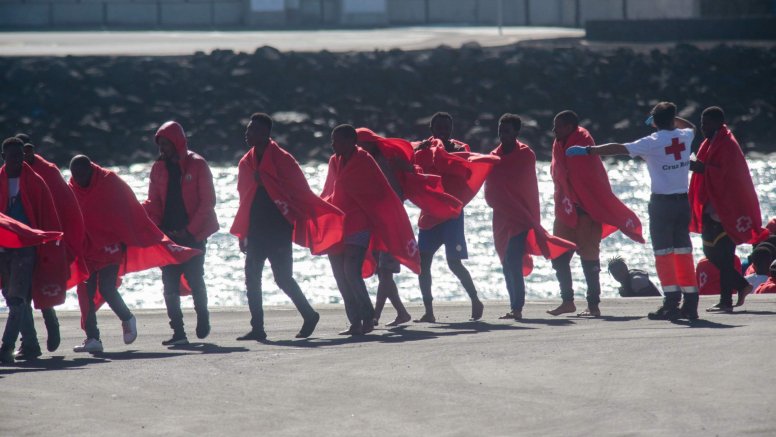
The regional summit in Santander will also seek an agreement on the migratory issue, on which the Government, communities, opposition and even some party of the investiture bloc, such as Junts, maintain differences that have made it impossible to even debate in Congress the proposed reform of Article 35 of the Immigration Law to make the distribution of unaccompanied migrant minors mandatory.
This is an issue that worries throughout Spain, but especially in the Canary Islands and Ceuta, which have been clamoring for an agreement that alleviates the migratory pressure they are suffering, and the Government has stated, on numerous occasions through Minister Torres, that it would "love" for a consensus agreement to emerge from the Conference of Presidents.
Consensus that is intuited complicated, after half a year of failed negotiations, after the leader of the PP warns that they insist that there will be no agreement if the Government does not accept the text that Feijóo agreed with the Canary Islands and that includes that the central Executive pay for the reception when the minors exceed 100% of the places and assume in first person the management when the centers exceed 150% of their capacity.
Healthcare personnel
As for the fourth issue, several communities specifically proposed including in the agenda of the Conference the lack of healthcare personnel that, as numerous regional governments have been stating, prevents giving a solution to problems such as the increase in waiting lists.
The demand is old, so much so that Núñez Feijóo already demanded a solution for this shortage of professionals at the Conference of Presidents in December 2021 when he was at the head of the Xunta de Galicia, it is true that then in the midst of the covid pandemic.
Although the Ministry of Health has launched plans, such as the Action Plan for Primary and Community Care 2022-2023, the situation has not improved significantly and the presidents of the Government and the autonomous communities will return to it next Friday.
Add La Voz de Lanzarote as a preferred Google source.
Stay informed with the latest current news.