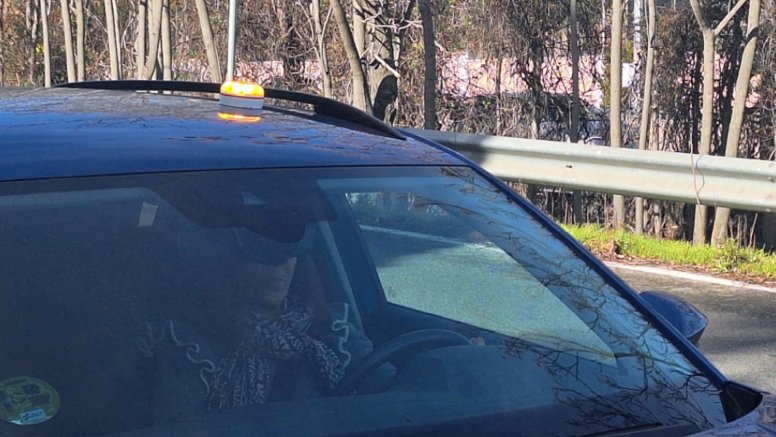
Starting January 1, 2026, the General Directorate of Traffic (DGT) says goodbye to the classic emergency triangles. From that day on, it will be mandatory for every vehicle to have a accident pre-signaling device: the V16 beacon.
What this means is that from January 1, 2026, the use of the warning triangle will no longer be legal in Spain, and only the V16 beacon can be used. The removal of the triangles is due to the risk of being run over that their placement entails.
This new device can emit a high-intensity 360º light intermittently for at least 30 minutes. The V16 beacon has a battery that allows it to have a useful life of more than 18 months.
According to the Directorate-General for Traffic, the device must be kept in the vehicle's glove compartment. Once a breakdown or accident occurs, it should preferably be placed on the roof. The beacon is not only equipped with a light but can also transmit the vehicle's real-time location via the DGT 3.0 platform and alert other users.
How do I know if my device is approved?
To find out if the device purchased is approved by the DGT, the official Traffic website has a search engine that allows you to check if a specific model or brand meets its legal requirements.
What vehicles are required to use this beacon?
Cars, mixed-use vehicles, and vehicles for transporting goods, as well as buses, will be required to signal with these beacons. Dangerous goods transport will also be required to do so
The only exception will be for those vehicles intended for the international transport of dangerous goods that travel through national territory, which may use the traditional triangles, as the measure is applicable only in Spain.
Can I use it outside of Spain?
Although the measure is only applied in Spain, the V16 beacon is also valid outside Spanish borders and within the European continent. According to the Vienna Convention on Road Traffic (1968), vehicles circulating in other signatory countries must comply with the regulations of the country in which they are registered.
Add La Voz de Lanzarote as a preferred Google source.
Stay informed with the latest current news.